


Exercise During Your Period: Which Movements Can Reduce Pain, Cramps, and Body Heaviness?
For many women, the start of a period means a few days of real changes in the body: the lower abdomen cramps, the lower back aches, energy drops, sleep becomes disrupted, or mood becomes more sensitive.
During these days, a simple but important question comes up: will moving help me now, or is it better to rest?

There is no single definitive answer for everyone. Some people feel better on the first day of their period only with warmth, sleep, and light food. Others feel that after a few minutes of walking or gentle stretching, their body comes out of a contracted state.
The important point is that exercise during a period is not meant to be a serious or high-pressure workout. The goal is mostly to help the body soften a little, improve blood flow, and relax the muscles around the abdomen, lower back, and pelvis.
If your pain is mild to moderate, you can start with a few short movements and see how your body responds. But if you have heavy bleeding, weakness, nausea, dizziness, or disabling pain, that day is not a good time to push yourself.
Instead of asking yourself, “Should I exercise or not?”, a better question is:
What kind of movement feels tolerable and calming for my body today? Sometimes the answer is walking. Sometimes it is only a few deep breaths. Sometimes it is none of them.
Best Exercises During Your Period
1. Gentle Walking
Walking is the simplest choice to start with. It does not require equipment, does not involve complicated movements, and does not place direct pressure on the abdomen.
Even 10 minutes of slow walking at home, around your workplace, or on a short route can reduce the feeling of stiffness and heaviness in the body. You are not supposed to sweat or raise your heart rate too much. If you can talk comfortably while walking, the intensity is more suitable for period days.
Simple suggestion:
Walk for 10 to 20 minutes at a slow or moderate pace. If the first day of your period is difficult for you, reduce the duration or postpone walking to the second day.
2. Lower Back Stretch
Lower back pain is one of the common complaints during periods. Sometimes the main pain starts in the abdomen, but the muscles of the lower back and pelvis also contract and increase the feeling of heaviness.
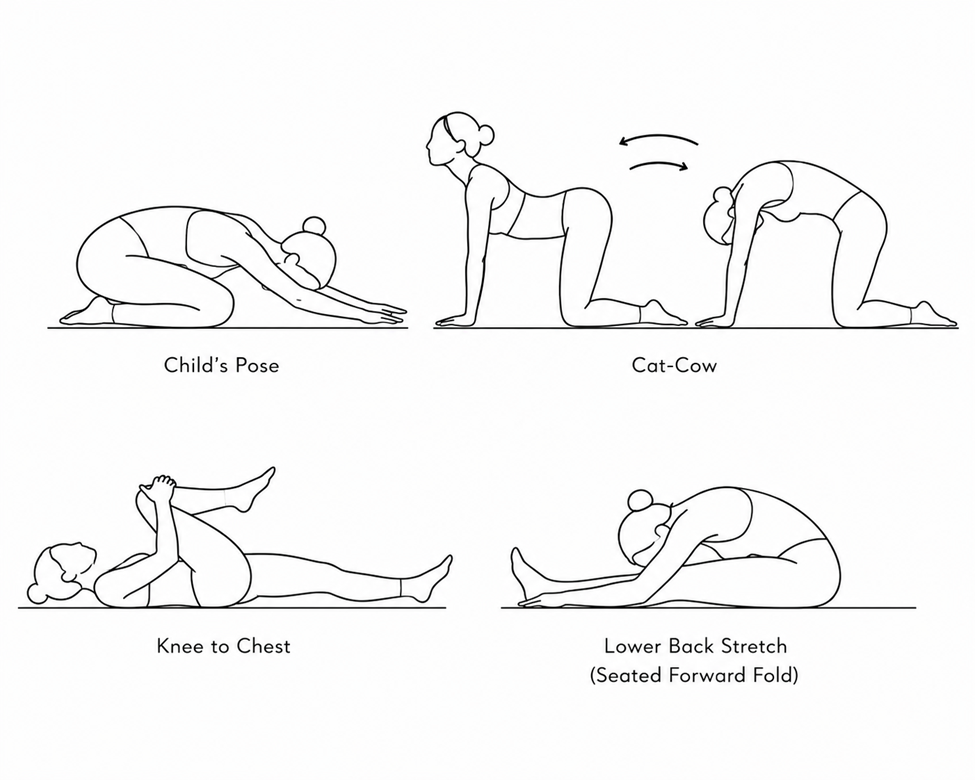
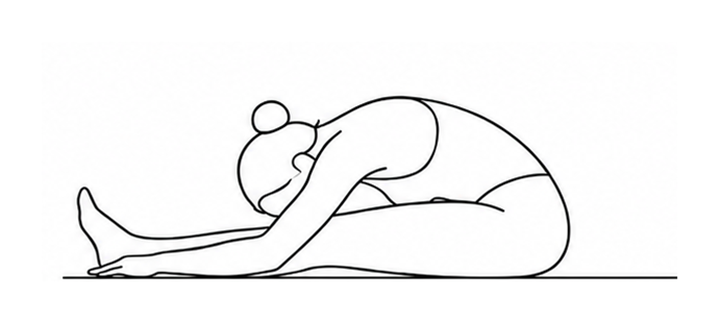
For a simple stretch, sit on the floor or bed. Place your legs in front of you and keep your knees slightly bent. Slowly bring your upper body forward, only until you feel a gentle stretch in the back of your legs or lower back.
You do not need to touch your toes. The perfect shape of the movement is not important; the feeling in your body matters more.
Suggested duration:
30 to 60 seconds, twice.
3. Child’s Pose
This movement is calming for many women during period days because it places the lower back and pelvis in a relaxed position and does not involve high exercise pressure.
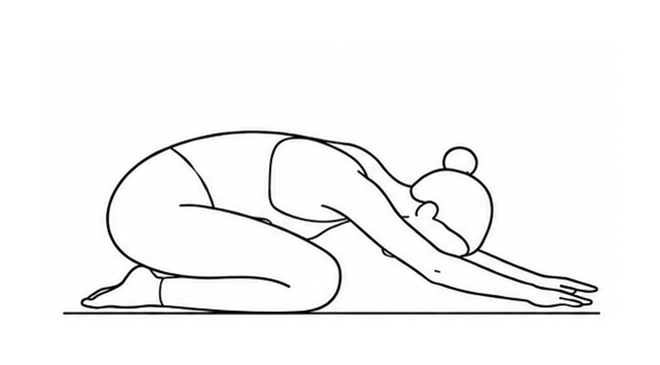
Sit on your knees, bring your upper body forward, and place your forehead on the floor, a pillow, or a blanket. Your arms can be stretched forward or placed beside your body. Take a few calm breaths and allow your abdomen, lower back, and shoulders to soften.
If your knees feel uncomfortable, place a blanket under them. If your abdomen feels sensitive, widen the distance between your knees slightly.
Suggested duration:
30 to 90 seconds.
4. Cat-Cow
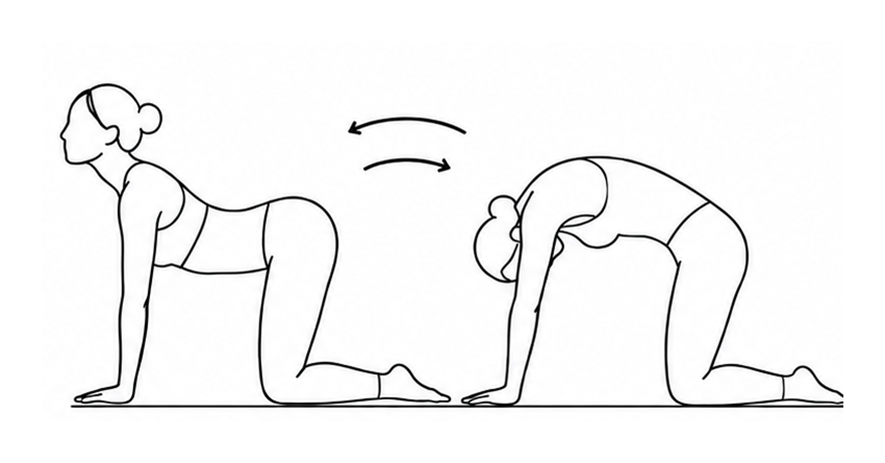
When we have period pain, we unconsciously curl the body inward. The shoulders come forward, the back becomes stiff, and the breaths become shorter. Cat-Cow helps the spine move with the rhythm of breathing.
Get on all fours. As you inhale, open the chest slightly and gently arch the lower back. As you exhale, round the back and lower the head slightly.
Do the movement slowly. If you do it quickly and impatiently, its calming effect becomes weaker.
Suggested repetitions:
8 to 12 repetitions.
5. Knee to Chest
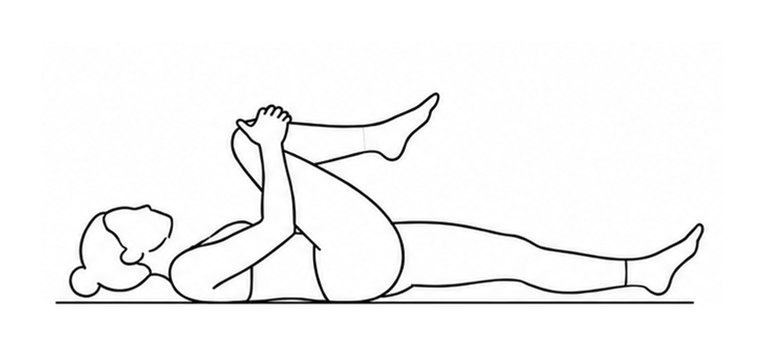
This movement is suitable when the lower back or pelvic area feels tight. Lie on your back, gently bring one knee toward your chest, and take a few deep breaths. Then switch legs.
Do not press the knee into the abdomen. The stretch should be soft, not uncomfortable.
Suggested duration:
20 to 30 seconds for each leg.
If lying on your back makes you feel worse, skip this movement.
6. Deep Breathing
Sometimes period pain comes with restlessness, anxiety, or general body contraction. In this situation, a few minutes of deep breathing can help calm the nervous system.
Lie on your side or back. Place one hand on your abdomen. Breathe in through your nose and let your belly rise slightly. Then exhale slowly. Focus on making the exhale longer, not on taking very deep or forced breaths.
Suggested duration:
2 to 5 minutes.
This exercise is a good option before sleep, after a warm shower, or when pain has made you restless.
A 10-Minute Routine for Painful Periods
If your pain is mild to moderate and you do not know where to start, this short routine can be a suitable option.
Minute 1 and 2: Deep breathing
Lie down, place one hand on your abdomen, and make the exhale slightly longer.
Minute 3 and 4: Cat-Cow
Move the spine gently 8 to 10 times.
Minute 5 and 6: Child’s Pose
Place your forehead on the floor or a pillow and take a few calm breaths.
Minute 7 and 8: Knee to Chest
Bring each leg separately toward the chest and hold without pressure.
Minute 9 and 10: Gentle walking or rest
If your body is ready, take a few steps. If not, continue the relaxed position.
This routine is not a treatment for period pain. It is only a simple way to reduce tension and help the body come out of a cramped state. If any movement increases the pain, stop right there.
Which Exercises May Not Be Suitable During Your Period?
During period days, some exercises may feel too intense for some people, especially when pain, bleeding, or low energy is present.
In these situations, it is better to be cautious with the following and even avoid them:
• HIIT workouts
• Long or fast running
• Very heavy weights
• Intense abdominal exercises
• Repeated jumps
• Long and high-pressure classes
• Exercise in high heat
• Any movement that increases abdominal or lower back pain
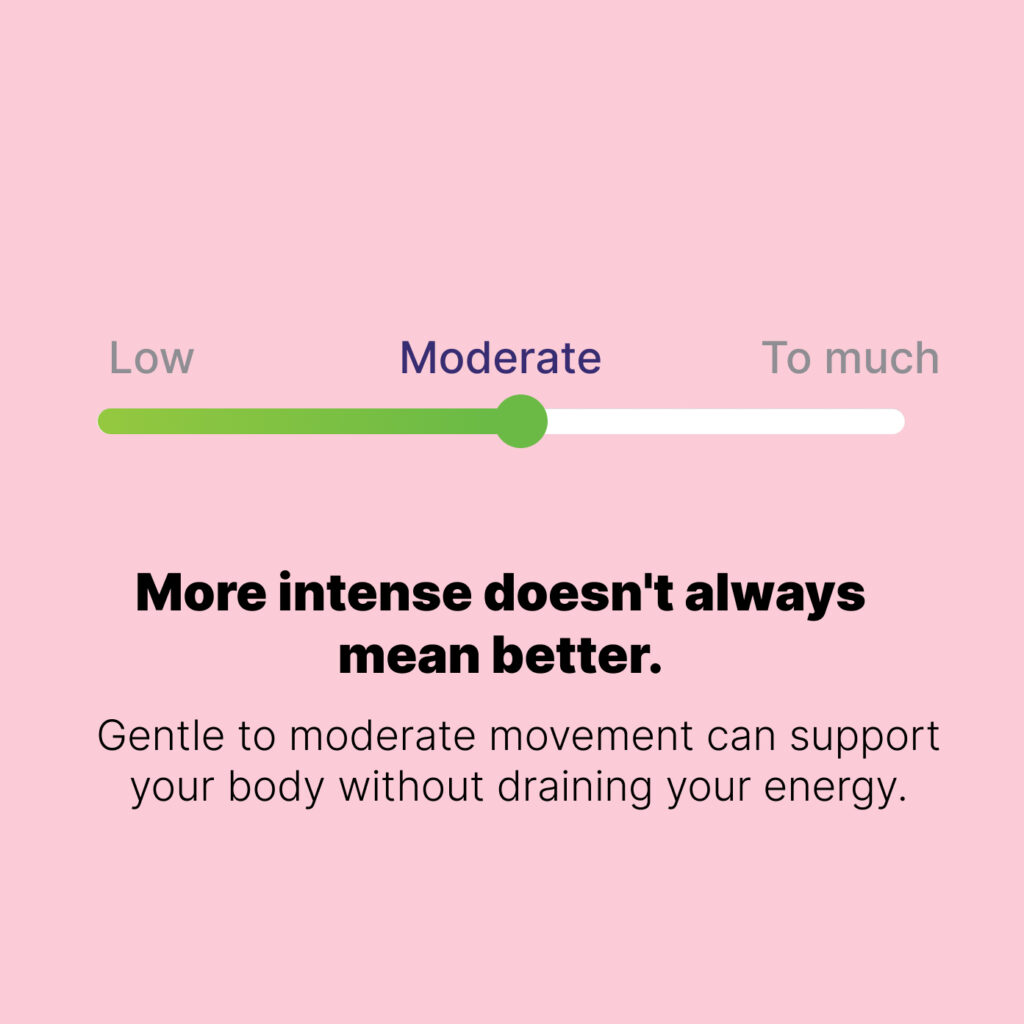
This list does not mean a complete ban. Some women continue their usual workouts during their period. A better measure is your own body’s response: if pain, weakness, or fatigue increases after exercise, that intensity was not suitable for that day.
If You Have No Energy During Your Period, Is It Okay Not to Exercise?
Yes. There is nothing wrong with not exercising on difficult period days.
Sometimes caring for the body means doing something; sometimes it means removing that thing. If you have slept poorly, your bleeding is heavy, you feel nauseous, or pain has taken over your focus, rest is a more logical choice.
Instead of exercising, you can use a few simple supports:
• Hot water bottle
• Warm shower
• Light and nourishing food
• Drinking enough water
• Short nap
• Calm breathing
• Reducing heavy daily plans
If pain or weakness repeats in every cycle and disrupts your daily life, it is better to record your symptoms in the DLady app and, after a few menstrual cycles, show the symptoms to a specialist so they can give you the best guidance.
How Can You Know Which Exercise Is Better for Your Period?
No plan works the same way for every body. Walking may be excellent for one person but uncomfortable for another person on the first day of the period. Even your own body may respond differently in each cycle.
To find your personal pattern, review a few things after each period:
• On which day was the pain more intense?
• Which movement created a better feeling?
• Which exercise increased the pain?
• Did sleep, stress, or nutrition affect the symptoms?
• Was the bleeding light, moderate, or heavy?
• Which day was better for returning to normal activity?
When you record this information for a few months, you gradually build a clearer picture of your own cycle. You may realize that on the first day you only need rest, on the second day stretching helps, and from the third day walking is more suitable for you.
In DLady, you can track pain, bleeding intensity, energy, sleep, mood, and symptoms. These data help make your period less frustrating; instead, with awareness, it becomes a more understandable pattern of your own body.
When Should Period Pain Not Be Considered Normal?
Mild to moderate period pain is common, but severe and disabling pain should not be assumed to be normal.
If every month pain prevents you from working, studying, sleeping, or doing daily activities, it is better to speak with a doctor. This is especially important if usual painkillers do not help or if the pain has worsened over time.
These symptoms also need more attention:
• Very heavy bleeding
• Pelvic pain outside the period
• Pain during sex
• Unusual spotting
• Very irregular periods
• Sudden or different pain
• Severe dizziness or fainting
• Worsening pain over several consecutive cycles
Sometimes severe period pain can be related to endometriosis, fibroids, infection, or pelvic problems. Exercise may make some symptoms more tolerable, but it does not replace medical diagnosis.
Conclusion
During your period, you do not need to do heavy workouts. If you have pain or cramps, movements such as short walks, lower back stretches, Child’s Pose, Cat-Cow, knee to chest, and deep breathing may help calm the body.
More important than choosing one specific exercise is paying attention to your own pattern. If you track your symptoms for several cycles in a row, you will better understand when to move, when it is better to rest, and what makes the pain better or worse.
DLady helps you follow these changes more easily; from period dates to pain, bleeding, energy, sleep, and mood.
Does exercise during your period increase bleeding?
Gentle exercise usually does not cause abnormal bleeding. However, because the body is moving, you may feel the blood flow more. If bleeding is very heavy or occurs with weakness and dizziness, stop exercising and consult a doctor.
What is the best exercise for period pain?
For many women, gentle walking, lower back stretching, Child’s Pose, Cat-Cow, and deep breathing are suitable options. The best choice is a movement that does not increase pain afterward and helps the body feel more comfortable.
Should you exercise on the first day of your period?
If you do not have severe pain or heavy bleeding, you can do a few gentle movements or take a short walk. But if the first day is difficult for you, resting is completely normal. You do not need to return to your usual exercise routine that same day.
Are abdominal exercises harmful during your period?
Intense abdominal exercises may increase lower abdominal pressure or cramps in some people. On painful days, instead of crunches, heavy planks, or pressure-based exercises, it is better to choose gentler movements such as lower back stretching, Cat-Cow, and deep breathing.
Is yoga good for painful periods?
Gentle yoga can help reduce tension and cramps. Heavy, long, or uncomfortable movements are not suitable. During your period, yoga is better when it is short, gentle, and adjustable to how your body feels.
When should you not exercise during your period?
Do not exercise if you have severe pain, very heavy bleeding, dizziness, nausea, obvious weakness, or unusual pain. If this situation repeats over several cycles, it is better to investigate the cause.