


What Exercise Should You Do During the Fertile Window?
During the fertile window, mild to moderate exercises such as brisk walking, gentle yoga, light Pilates, pelvic stretches, and controlled strength training are usually suitable choices. No exercise can trigger ovulation immediately, but some gentle forms of activity may support hormonal balance, stress reduction, metabolic health, and the body’s readiness for pregnancy.
The Fertile Window: A Few Days When Regular, Unprotected Intercourse Can Lead to Pregnancy
If you are trying to conceive, the fertile window is not just a date range on a calendar. For many women, these few days come with hope, attention, a little anxiety, and many questions.
Is today a good day to have intercourse?
Is ovulation getting close?
Does exercise help, or could it reduce the chance of pregnancy?
If I do a heavy workout, will it affect ovulation?

These questions are completely natural. When you are waiting for pregnancy, even ordinary daily activities can take on a new meaning. Exercise is one of those topics that can fall somewhere between “taking care of the body” and “worrying about overdoing it.”
The good news is this: for most women, physical activity during fertile days is not forbidden. The main issue is the type and intensity of exercise.
First, Let’s Define It More Clearly: What Is the Fertile Window?
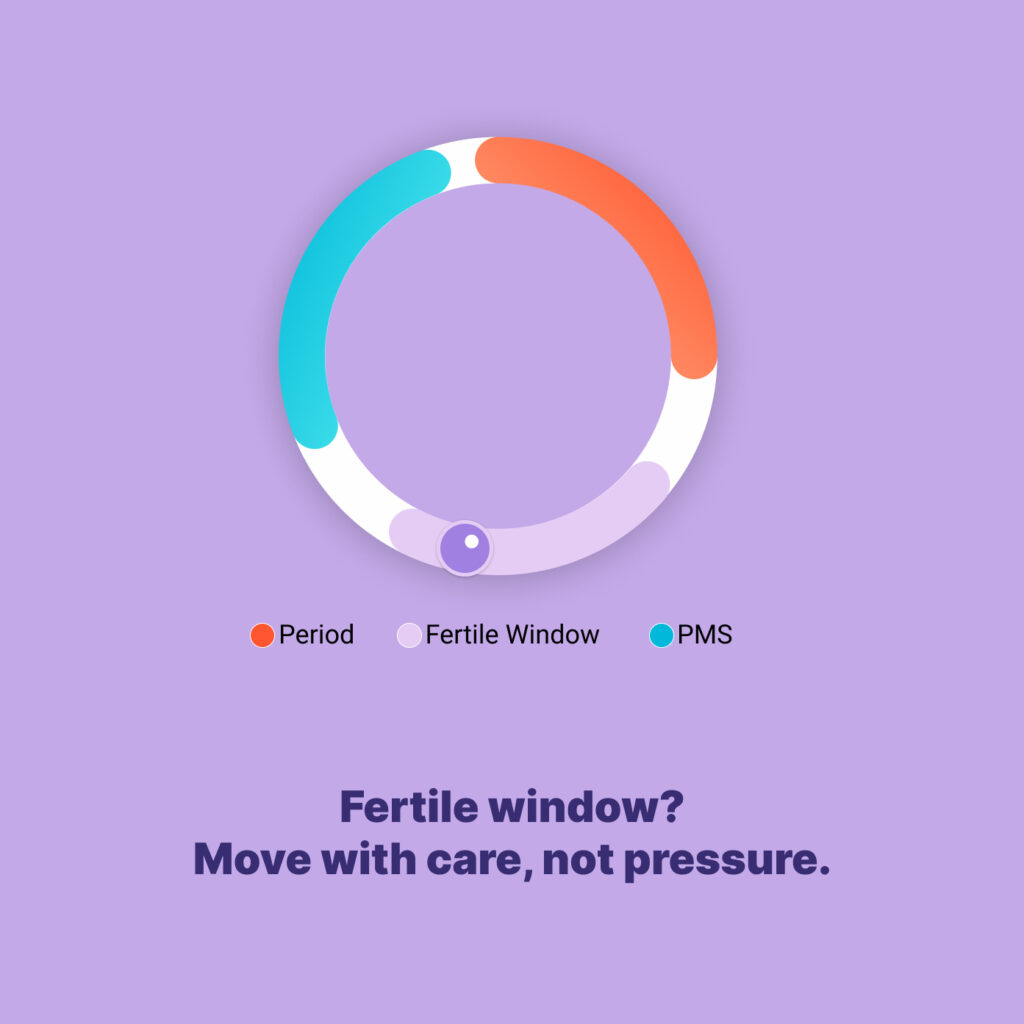
The fertile window usually refers to the few days before ovulation and the day of ovulation itself; in other words, the time when the chance of pregnancy is highest. The American Society for Reproductive Medicine defines this window as approximately 6 days ending on the day of ovulation.
During these days, the body may show some signs. For example, vaginal discharge may become clearer and more stretchy, sexual desire may change, some women may feel mild one-sided lower abdominal pain, or their energy may feel different from previous days.
These signs are not the same for everyone. Some women have clear symptoms, while others feel almost no change. That is why relying only on body sensations is not always enough, and tracking several cycles can provide a more accurate picture.
Using apps such as DLady, which include predictive algorithms for the menstrual cycle, can also help estimate each phase of the cycle. Whether your periods are regular or irregular, predictable or unpredictable, use DLady and review your menstrual cycle plan for the next 6 months.
Does Exercise Improve Ovulation?
It is better to be precise and honest here: there is no specific exercise that causes ovulation on the same day or guarantees that an egg will be released.
But this does not mean exercise has no effect.
Regular physical activity can support reproductive health through several pathways — not as an instant button, but as part of a lifestyle. Exercise can play a role in weight regulation, improved insulin sensitivity, reduced inflammation, better sleep quality, stress management, and overall body balance. All of these are important for a more regular cycle and healthier ovulation.
This is especially important for women with PCOS, because insulin resistance and irregular ovulation are more common in this group. Studies have shown that physical activity in women with PCOS may help improve some menstrual, hormonal, and metabolic indicators.
So, if we want to say it simply:
Exercise does not “create” ovulation, but it can support a body that has better conditions for ovulation.
During the Fertile Window, Is Light Exercise Better or Heavy Exercise?
For most women trying to conceive, the smart choice during the fertile window is to choose activities that keep the body active without leaving it exhausted or depleted.
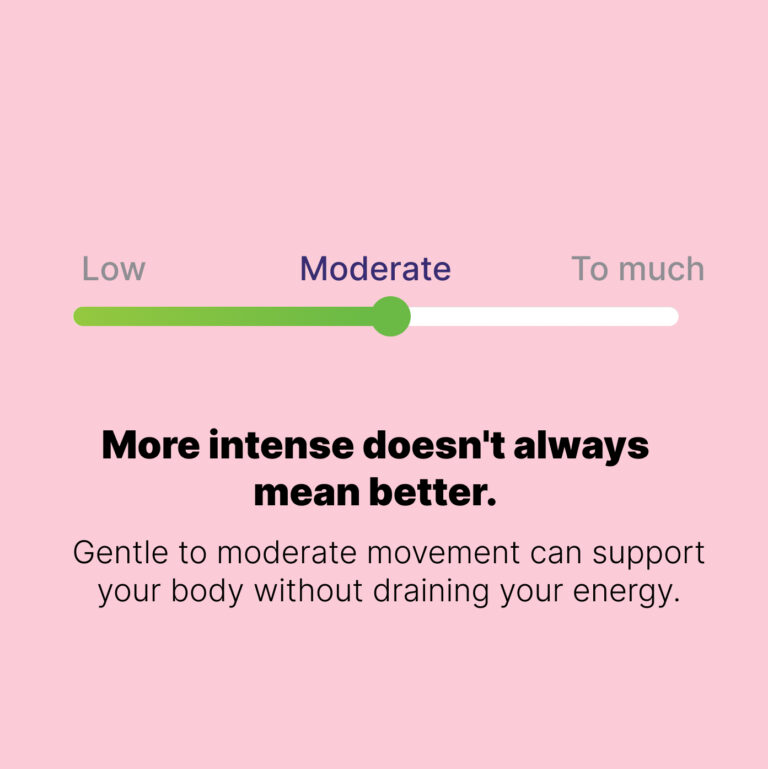
A study published in Fertility and Sterility that evaluated more than 3,600 women showed that moderate physical activity may be associated with a slight increase in fecundability per cycle. However, long and vigorous exercise, especially in some women with normal weight, was associated with a longer time to pregnancy.
This means more exercise is not always better.
The body needs enough energy for ovulation, hormone production, and preparation for pregnancy. When intense exercise is combined with undereating, poor sleep, or high stress, the body may shift into an energy-saving mode. In such conditions, the menstrual cycle, timing of ovulation, or even the quality of the post-ovulation phase may be affected.
Of course, this is not the same for everyone. Someone who has been exercising for years may have a body that is more adapted to training. But if you have recently started intense exercise or your cycle has become more irregular in recent months, it is better to take training intensity more seriously.
Best Exercises During the Fertile Window
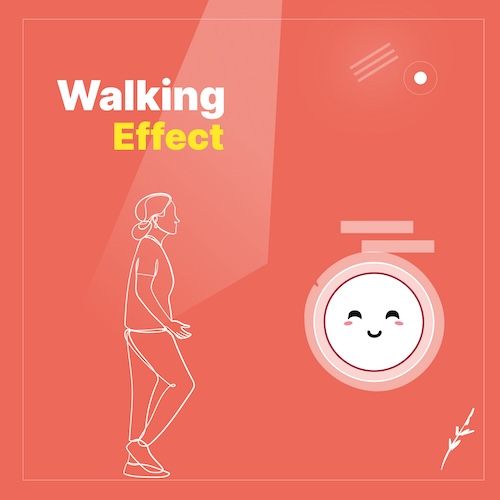
1. Brisk Walking: Simple, Low-Risk, and Sustainable
Brisk walking is one of the best choices for the days close to ovulation. It gets the body out of inactivity, supports circulation, does not place excessive pressure on the abdomen or pelvis, and is doable for most people.
The right intensity means you breathe a little faster but can still talk. If you feel lighter and more energetic after walking, the intensity was probably suitable for you. If you feel completely drained or remain tired for several hours, it is better to reduce the time or speed.
To start, 20 to 30 minutes of walking on most days of the week is enough. On a day when you have ovulation pain or bloating, even 10 to 15 minutes can be a good choice.
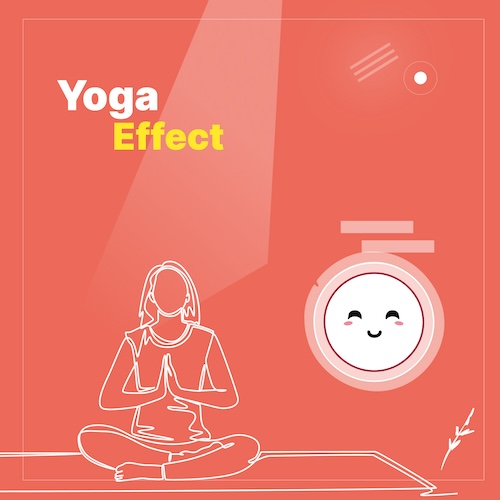
2. Gentle Yoga: For Reducing Tension, Not Creating Pressure
During the fertile window, yoga can be more of a way to calm the body and mind than a heavy workout. When you are trying to conceive, sometimes the mental pressure is harder than the exercise itself. Monthly calculations, waiting, and hope can keep the body in a state of alert.
Gentle movements such as Cat-Cow, Child’s Pose, Butterfly Stretch, light Low Lunge, and seated stretches can help release tension in the pelvic, lower back, and thigh muscles. The important point is that the movements should not be long, painful, or forceful.
If a movement causes strong abdominal stretching, pelvic pain, or discomfort, you do not need to continue. In this phase, yoga should feel like softening the body, not fighting it.
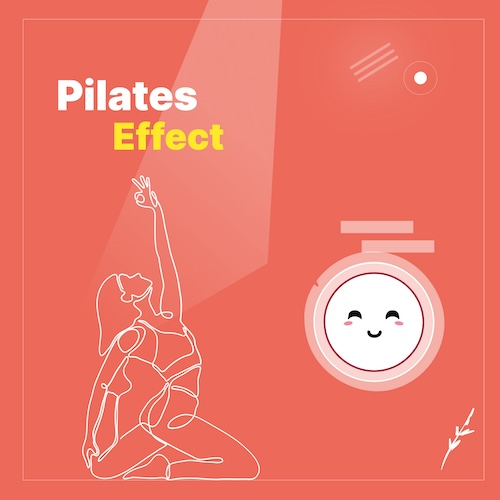
3. Light Pilates: Suitable for Body Control and Core Muscles
If Pilates is done gently and with control, it can support posture, core muscles, and pelvic stability. However, very intense versions or abdominal-pressure exercises may not be the best choice for every woman during fertile days.
Exercises such as glute bridges, gentle pelvic movements, light core activation, and controlled stretches can be suitable. It is better to avoid exercises that put excessive pressure on the abdomen, involve jumping, or push the body to exhaustion — especially if you are a beginner.
Good Pilates during these days means that after the workout, your body feels more aligned, warmer, and more comfortable — not that you need a long recovery period.
4. Light to Moderate Strength Training: Especially for Metabolic Health
Strength training is not only for bodybuilders. It can also be helpful for women trying to conceive, because more active muscles support better blood sugar control, more stable energy, and healthier body composition.
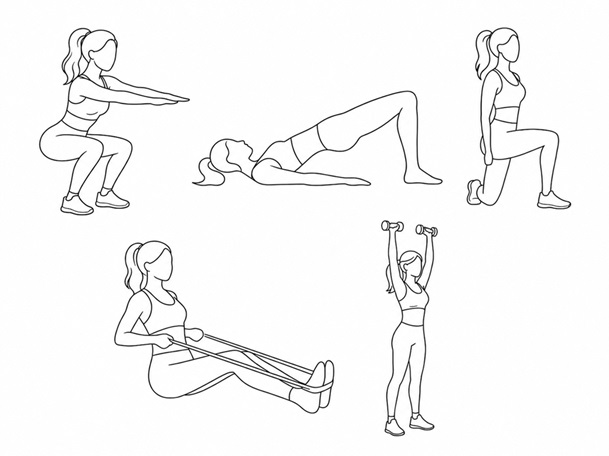
During the fertile window, it is better to keep strength training shorter and more controlled. You do not need to break a weightlifting record. Movements such as bodyweight squats or squats with light weights, glute bridges, short lunges, resistance-band exercises, and simple upper-body movements can be enough.
A simple sign for adjusting intensity:
If you feel strong and calm after exercise, it is good. If you remain tired, irritable, or low-energy until the evening, the workout was probably too intense for this phase.
5. Pelvic and Lower Back Stretches: When the Body Feels More Sensitive Around Ovulation
Some women experience bloating, mild one-sided lower abdominal pain, or heaviness in the pelvis around ovulation. On such days, gentle stretches can help the body come out of a contracted state.
Movements such as Butterfly Stretch, knee-to-chest, lower back stretch, Cat-Cow, and hip flexor stretches are good options. These movements do not activate ovulation; their value lies in reducing tension and making the body feel more comfortable.
It is better to do each stretch briefly, gently, and without force. Intense stretching during these days is not necessary and is not always helpful.
6. Deep Breathing: Simple but Important for Days Full of Waiting
Sometimes the fertile window is mentally heavier than physically. Your attention may be fully focused on timing intercourse, ovulation signs, or the possibility of pregnancy. If this level of focus repeats every month, it can create stress.
A few minutes of calm breathing can help move the body out of tension. A simple exercise is:
4 seconds inhale
6 seconds exhale
Repeat for 2 to 5 minutes
This exercise alone is not going to increase the chance of pregnancy, but it can help you cope with these few days with less anxiety.
Which Exercises Are Better to Do More Lightly During the Fertile Window?
You do not need to be afraid of exercise, but if you are trying to conceive, it is better to be more cautious with some workouts — especially if your body is not used to them.
During these days, it is better to limit or reduce the intensity of:
• Long and intense HIIT
• Very long runs
• Lifting weights to complete failure
• Intense abdominal exercises
• Exercising in high heat
• Back-to-back high-intensity classes
• Heavy training combined with strict dieting
• Suddenly starting a new exercise program
The issue is not only exercise itself; the combination of heavy training with lack of sleep, undereating, and stress can place pressure on the body.
If after increasing workout intensity you notice that your periods have become more irregular, ovulation is delayed, fertile cervical mucus has decreased, or you are always tired, it is better to review your program.
Should You Exercise on Ovulation Day or Not?
If you feel well and your doctor has not given you any restrictions, there is usually no need to stop exercise on ovulation day. However, that day is not the best time to start a new and intense workout.
It is better to choose something your body is familiar with, such as walking, gentle yoga, short stretching, or light exercise. If you have ovulation pain, bloating, or abdominal sensitivity, reduce the intensity.
On this day, the goal is not to “do something for ovulation.” Ovulation follows its own biological path. What you can do is keep the body in a calmer and lower-tension state.
A Simple Exercise Plan for the Fertile Window
This plan is suitable for someone who has no medical restrictions and wants to stay active during the fertile window without placing unnecessary pressure on the body.
Day 1
20 to 30 minutes of brisk walking
A few minutes of lower back stretching
Day 2
Light strength training
Simple squats, glute bridges, resistance-band exercises, or short lunges
Day 3
Gentle yoga or light Pilates
Focus on breathing, pelvis, and spine
Day Close to Ovulation
Short walk, gentle stretching, or deep breathing
No new or exhausting workout
Day After Ovulation
Normal activity, but without extra pressure
Prioritize sleep and nutrition
This is only a general pattern, not a medical prescription. If you have severe PCOS, endometriosis, pelvic pain, a history of miscarriage, IVF, or IUI, it is better for your exercise plan to be personalized.
How Does DLady Help You Understand Your Fertile Window Better?
The fertile window is not just a number on the calendar. During this phase, the body may show signs — from changes in discharge and energy to mild ovulation pain, mood changes, or differences in sleep.
When you track these signs for several cycles, you gradually begin to see your own pattern. You may realize that you always have more energy two days before ovulation. You may notice that mild pelvic pain repeats at a specific time every month. Or you may discover that calendar-based prediction alone is not enough for you.
In DLady, you can track your period dates, fertile window, symptoms, discharge, energy, mood, intercourse, and mild pains. These data help you make decisions based on understanding your own body, not guesswork and worry.
Conclusion
During the fertile window, you do not need to stop exercising. For most women, brisk walking, gentle yoga, light Pilates, pelvic stretches, and controlled strength training are good choices. Of course, this applies only if you have no medical restrictions and are not in a special physical condition. If you are unsure about your condition, consult your own specialist.
The important point is that exercise should not push the body to exhaustion. If you are trying to conceive, choose exercises that leave you feeling more energetic, calmer, and better afterward.
Exercise alone does not guarantee ovulation, but it can support the body on the path to pregnancy — especially when combined with enough sleep, proper nutrition, stress reduction, and accurate cycle awareness.
DLady helps you track your fertile window, symptoms, intercourse, energy, and cycle changes over several months, because when it comes to pregnancy, understanding your body can be just as important as the calendar itself.
Does exercise during the fertile window increase the chance of pregnancy?
Moderate exercise can support overall health, healthy weight, better insulin sensitivity, sleep, and stress reduction. These factors are important for fertility. However, there is no specific exercise that guarantees ovulation on the same day or causes pregnancy by itself.
What is the best exercise close to ovulation?
Brisk walking, gentle yoga, light Pilates, controlled strength training, and pelvic stretches are usually suitable choices. It is better to choose an exercise that does not leave you exhausted, in pain, or weak for a long time afterward.
Can heavy exercise delay ovulation?
In some people, very intense or long exercise, especially when combined with undereating and poor sleep, can affect the cycle and ovulation. If your periods have become irregular after increasing workout intensity, it is better to review your program.
Should we exercise on ovulation day or rest?
If you feel well and have no medical restrictions, complete rest is usually not necessary. But it is better not to do a heavy, long, or new workout on that day. Walking, stretching, or gentle yoga are safer choices.
Does yoga help ovulation?
Yoga does not directly cause ovulation, but it can help reduce tension, calm the body, and improve awareness of the cycle. For women trying to conceive, gentle yoga is usually a better choice than high-pressure workouts.
If I have PCOS, what exercise is better?
For many women with PCOS, a combination of moderate aerobic exercise such as brisk walking and light to moderate strength training can be helpful. This combination may support better insulin sensitivity and cycle regularity, but the exact plan should be adjusted based on your body and your doctor’s advice.