


If You Are Genetically Prone to Weight Gain, Short-Term Diets Are Not Enough
Some people genuinely feel like their body works differently from others.
One person may eat more for several days and notice almost no change in weight, while another may experience bloating, heaviness, or weight gain very quickly from the same amount of food.
This experience does not always come from “lack of willpower” or “eating badly.” Body weight is influenced by a combination of factors: genetics, sleep, stress, activity level, medications, illnesses, environment, eating habits, and even family history. The NIDDK also emphasizes that weight is not only about calories and that genes, sleep, medications, illnesses, and living environment can all influence body weight.

But there is one important point here:
Genetics may mean your body is more sensitive — not that there is no way to manage your weight.
For someone who is genetically prone to gaining weight, the solution is usually not a strict two-week diet, completely eliminating rice and bread, or eating salads for a few days. This type of body needs a repeatable eating pattern more than a “temporary diet” — a pattern in which protein, vegetables, carbohydrates, and healthy fats are included in daily meals according to the person’s body, lifestyle, and goals.
Short Answer: What Is the Best Diet for People Prone to Weight Gain?
The best diet for people with a genetic tendency toward weight gain is usually not a short-term restrictive diet. These individuals need a sustainable pattern: enough protein, daily vegetables and fiber, controlled high-quality carbohydrates, healthy fats, enough sleep, and regular activity.
The goal is not to eliminate food; the goal is to regulate what enters the body.
What Does “Obesity Genetics” Mean?
When we say someone is “genetically prone to obesity,” it does not mean their body is doomed to become overweight. It means their body may be more sensitive to certain factors.
For example, they may:
- Feel full more slowly
- Become hungry more quickly
- Crave sweets or carbohydrates more during stress
- Experience more appetite when sleep-deprived
- Gain weight faster in environments full of high-calorie foods
- Develop body fat more quickly with inactivity
- Regain weight more rapidly after strict diets
These individuals often do not get lasting results from crash diets because their body enters a defensive state under severe restriction. Weight may drop during the first week, but after a while hunger, fatigue, snacking, cravings, and weight regain begin.
So the real question is not:
“How can I lose weight fast?”
A better question is:
“How can I eat in a way that keeps my body satisfied, calm, energetic, and manageable?”
Why Are Short-Term Diets Problematic for Bodies Prone to Weight Gain?
Temporary diets usually have three characteristics:
- They are highly restrictive
- They do not fit real life
- They are eventually abandoned
For example, someone may eliminate bread, rice, fruit, or dinner for several weeks. The number on the scale may go down, but this does not always mean sustainable fat loss. Sometimes part of the weight loss is water, glycogen depletion, or even muscle loss.
The main problem is that the body cannot stay in “survival mode” forever. If a diet is too strict, both the mind and body become exhausted. The result is usually one of these:
- Overeating after several weeks of restriction
- Weight regain
- Feeling like a failure
- A worse relationship with food
- Extreme restriction and rebound eating
- Reduced energy and motivation to exercise
That is why someone whose body gains weight easily needs dietary consistency more than anything else.
The Important Principle: Your Body Needs Balance, Not Shock
For bodies prone to weight gain, three food groups play a major role:
- Protein
- Vegetables and fiber
- High-quality carbohydrates
The point is not to remove one of them. The point is to adjust their proportions correctly.
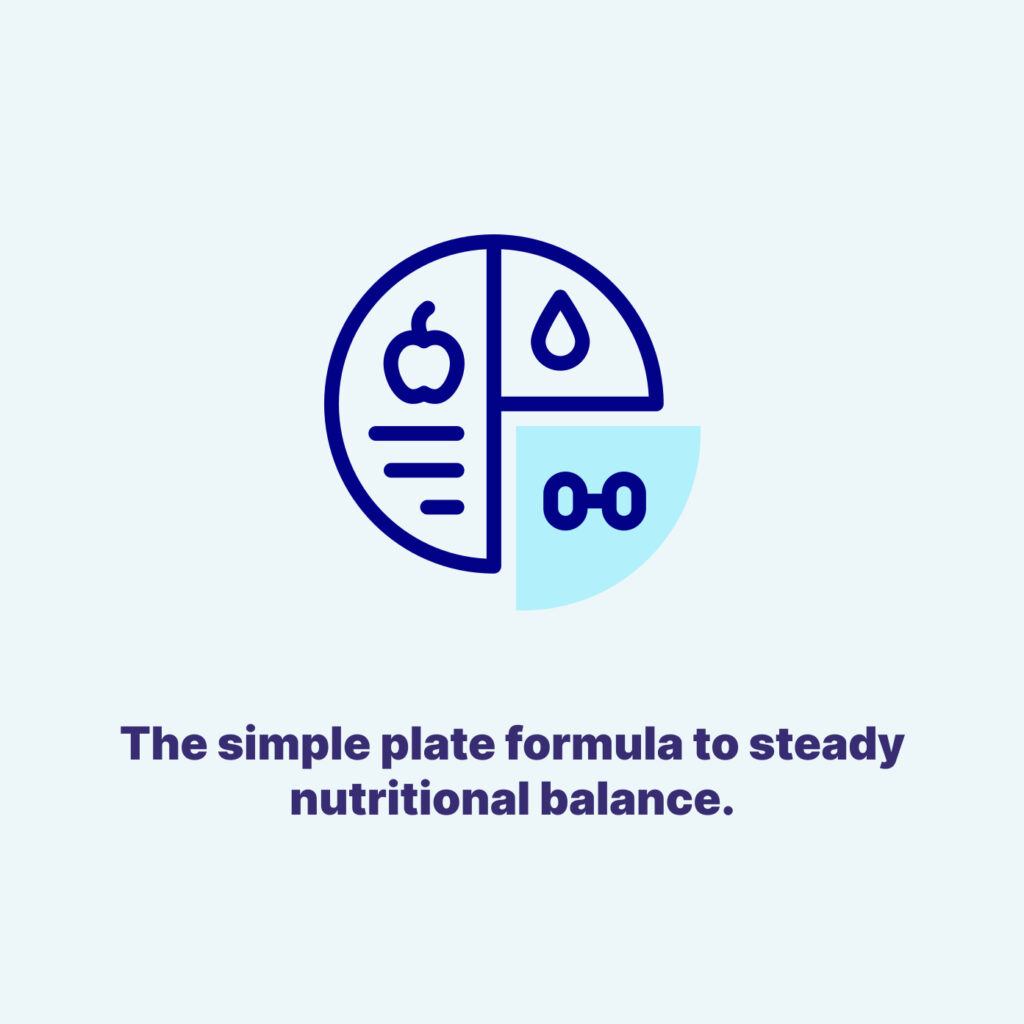
A simple and practical plate can look like this:
| Plate Section | Suggested Amount |
|---|---|
| Vegetables | Half of the plate |
| Protein | One-quarter of the plate |
| High-quality carbohydrates | One-quarter of the plate |
| Healthy fats | Small and controlled amount |
This model is both understandable and realistic for daily life. There is no need to count calories every day; it is enough to learn how to balance your plate.
Protein: The Foundation of Satiety and Muscle Preservation
Protein is extremely important for bodies prone to weight gain because it helps with fullness, muscle preservation, and better meal control.
The basic recommended intake for protein in many nutrition references is about 0.8 grams per kilogram of body weight per day. Harvard Health also presents this number as the RDA or baseline recommendation for adults, although active individuals, older adults, or people doing resistance training may require more.
Simple Protein Calculation Table
| Body Weight | Minimum Daily Protein |
|---|---|
| 60 kg | About 48 g |
| 70 kg | About 56 g |
| 80 kg | About 64 g |
| 90 kg | About 72 g |
| 100 kg | About 80 g |
This is not a medical prescription, but it is a very helpful mental starting point. People with kidney disease, pregnancy, diabetes, liver disease, or other medical conditions should determine their exact protein needs with a doctor or dietitian.
Good Protein Sources
- Eggs
- Chicken and turkey
- Fish
- Lean meat
- Greek yogurt or plain dairy
- Lentils, beans, chickpeas
- Tofu and soy
- Nuts and seeds, in controlled portions
An important point is that protein should be distributed throughout the day. Many people eat almost no protein at breakfast, become hungry at noon, crave sweets in the afternoon, and eat a heavy dinner at night. This pattern can make weight management harder.
Vegetables and Fiber: A Way to Feel Full Without Heaviness
If your body gains weight easily, vegetables are not just a cliché recommendation. Vegetables help increase food volume without making meals excessively high in calories.
WHO recommends that people over age 10 consume at least 400 grams of fruits and vegetables daily and at least 25 grams of natural fiber per day. The same source emphasizes that a healthy diet should be based on balance, variety, adequacy, and moderation.
Why Is Fiber Important for People Prone to Weight Gain?
Because fiber:
- Increases satiety
- Supports better digestion
- Slows blood sugar spikes
- Improves meal quality
- Reduces cravings and snacking
Simply put, if a meal consists only of rice, bread, pasta, or meat, the body may quickly look for more food again. But when the same meal includes salad, cooked vegetables, legumes, or fresh herbs, the body experiences steadier fullness.
Carbohydrates: Not the Enemy, But They Must Be Chosen Correctly
One common mistake in strict diets is completely removing carbohydrates. Many people think that if their body is prone to weight gain, they should never eat bread, rice, potatoes, oats, or fruit again.
But the main issue is not “the existence of carbohydrates.” The issue is the type, quantity, and combination with other foods.
WHO’s healthy diet guidelines state that carbohydrates can provide about 45–75% of daily energy for most people, but they should mainly come from unrefined sources such as whole grains, vegetables, fruits, and legumes.
Better Carbohydrates
- Oats
- Real whole-grain bread
- Brown rice or controlled portions of white rice
- Boiled or baked potatoes
- Lentils, chickpeas, beans
- Whole fruit
- Bulgur, quinoa, or whole wheat
Carbohydrates That Should Be Limited
- Sweets
- Cakes and cookies
- Sugary drinks
- Excessive fruit juice
- Large amounts of white bread
- Ultra-processed foods
- Salty and sugary snacks
The CDC also emphasizes whole foods, protein, vegetables, fruits, healthy fats, and whole grains while recommending limiting highly processed foods, added sugars, excess sodium, and refined carbohydrates.
Two-Week Meal Plan for People Prone to Weight Gain
This program is a general example, not a medical prescription. If you are pregnant, breastfeeding, diabetic, have kidney disease, thyroid disorders, PCOS, digestive disorders, or other medical conditions, your meal plan should be adjusted with a doctor or dietitian.
The goal of this program is not rapid weight loss. The goal is to introduce the body to a more balanced pattern over two weeks: enough protein, daily vegetables, controlled carbohydrates, and manageable snacks.
Week One
| Day | Breakfast | First Snack | Lunch | Second Snack | Dinner | Before Bed |
|---|---|---|---|---|---|---|
| Saturday | 2 boiled eggs + whole-grain bread + cucumber and tomato | 1 apple + 5 almonds | Grilled chicken + half plate salad + 4–5 tablespoons rice | Plain yogurt + cinnamon | Vegetable soup + lentils or shredded chicken | Sugar-free herbal tea |
| Sunday | Greek yogurt + oats + banana slices | Carrot or cucumber + hummus | Bean or lentil stew + salad + small amount of whole-grain bread | 1 orange | Vegetable omelet with 1–2 eggs | Warm low-fat milk or herbal tea |
| Monday | Whole-grain bread + low-salt cheese + walnuts + herbs | Seasonal fruit | Fish or chicken + cooked vegetables + small boiled potato | Plain yogurt or kefir | Chicken salad with lettuce, cucumber, tomato, and a little olive oil | Chamomile tea |
| Tuesday | Fried egg with little oil + mushrooms and bell peppers | A few berries or one small fruit | Lean meat or chicken stew + vegetables + small amount of rice | 5–7 pistachios or almonds | Low-oil herb kuku + salad | Water or herbal tea |
| Wednesday | Oats with low-fat milk + cinnamon + apple pieces | Cucumber + a few nuts | Chickpea or bean stew + large salad | 1 boiled egg | Chicken or turkey + steamed vegetables | Sugar-free herbal tea |
| Thursday | Whole-grain bread + small amount of peanut butter + small banana | 1 fruit | Chicken kebab or lean meat + vegetables + 4 tablespoons rice | Greek yogurt | Barley soup + salad | Warm low-fat milk |
| Friday | Tomato omelet + whole-grain bread + herbs | Seasonal fruit + a few almonds | Controlled family meal: half plate salad, quarter protein, quarter carbohydrates | Tea + 1 date | Light dinner: salad, eggs, or yogurt with vegetables | Herbal tea |
Week Two
| Day | Breakfast | First Snack | Lunch | Second Snack | Dinner | Before Bed |
|---|---|---|---|---|---|---|
| Saturday | Greek yogurt + flaxseed + chopped fruit | Cucumber and carrots + hummus | Chicken + large salad + small whole-grain bread | 1 apple | Vegetable dish + eggs or legumes | Sugar-free herbal tea |
| Sunday | 2 eggs + whole-grain bread + tomato | Small handful of nuts | Light lentil rice + salad + yogurt | Orange or kiwi | Chicken and vegetable soup | Low-fat milk |
| Monday | Low-salt cheese + walnuts + herbs + whole-grain bread | Seasonal fruit | Fish + vegetables + small potato | Plain yogurt + cinnamon | Protein salad with chicken or eggs | Herbal tea |
| Tuesday | Oats + milk + cinnamon + banana pieces | Boiled egg | Bean or chickpea dish + salad | A few almonds | Mushroom and spinach omelet | Water or herbal tea |
| Wednesday | Whole-grain bread + eggs + cucumber and tomato | 1 apple | Lean meat or chicken + vegetables + small amount of rice | Greek yogurt | Vegetable soup + legumes | Chamomile tea |
| Thursday | Yogurt + oats + a few nuts | Seasonal fruit | Grilled chicken + salad + controlled carbohydrates | Carrot or cucumber | Low-oil herb kuku + salad | Warm low-fat milk |
| Friday | Controlled flexible breakfast: protein + limited bread + vegetables | Fruit + a few nuts | Favorite meal using the plate method: half vegetables, quarter protein, quarter carbohydrates | Sugar-free tea + 1 date | Very light dinner: yogurt, salad, eggs, or soup | Herbal tea |
How to Adjust This Plan to Your Body Weight
This table is not meant to be followed with identical amounts for everyone. The body of a 55-kg woman does not have the same needs as the body of a 95-kg man.
So it is better to adjust portions using three principles:
1. Look at Protein Based on Body Weight
As a starting point, consider minimum daily protein around 0.8 grams per kilogram of body weight unless your doctor or dietitian recommends otherwise.
2. Do Not Reduce Vegetables
If you become hungry, the first thing to increase is usually vegetables, salad, vegetable soup, or legumes — not sweets or white bread.
3. Do Not Remove Carbohydrates — Measure Them
If you are more physically active, you may need more carbohydrates. If you are less active, the amount should be more controlled.
Who Is This Diet More Suitable For?
This pattern may work well for people who:
- Gain weight easily
- Regain weight after strict diets
- Snack excessively during the day
- Eat low-protein breakfasts
- Consume few vegetables
- Experience strong cravings after removing carbohydrates completely
- Want to improve their lifestyle before trying to conceive
However, this program is not enough for everyone. People with severe obesity, diabetes, thyroid disorders, PCOS, kidney disease, eating disorders, or hormonal conditions should receive a personalized plan.
The Relationship Between Nutrition, Weight, and Fertility
For DLady, nutrition is not only about appearance or the number on the scale. Nutrition can affect energy, sleep, inflammation, blood sugar, menstrual cycle quality, sperm quality, and the body’s readiness for pregnancy.
In women, weight fluctuations, severe undereating, or unbalanced diets may affect cycle regularity and quality of life. In men, lifestyle, nutrition, sleep, stress, and processed foods may influence overall health and sperm quality.
So when we talk about “diet,” we are not only talking about weight loss.
We mean helping both women’s and men’s bodies become more prepared for fertility and long-term health.
DLady’s Role in Understanding Body Patterns
Many people do not know exactly when their body becomes hungrier, which days cravings become stronger, how sleep affects appetite, or how the menstrual cycle relates to energy and food cravings.
Daily tracking can make these patterns clearer.
In DLady, you can track your cycle, symptoms, body changes, fertility signs, and lifestyle-related data. This information helps you understand your body better and make more informed nutrition and health decisions.
Mid-Article CTA
If you want to understand which days your body needs more rest, protein, support, or meal adjustments, start tracking your cycle and symptoms in DLady.
Common Mistakes in Diets for People Prone to Weight Gain
1. Completely Eliminating Bread and Rice
Completely removing carbohydrates is not necessary for everyone. It is better to improve their quantity and quality.
2. Undereating in the Morning, Overeating at Night
A breakfast without protein usually leads to stronger hunger later in the day.
3. Eating Salad Without Protein
Salad alone may lead to intense hunger a few hours later. It is better paired with eggs, chicken, legumes, fish, or Greek yogurt.
4. Eating Large Amounts of Nuts Because They Are “Healthy”
Almonds, walnuts, and pistachios are healthy, but they are calorie-dense and should be portion-controlled.
5. Replacing Meals with Coffee
Coffee may temporarily reduce appetite, but it does not replace a balanced meal.
6. Ignoring Sleep
Sleep deprivation can increase appetite and worsen food choices. NIDDK notes that insufficient sleep is associated with greater hunger, higher calorie intake, and less healthy food choices.
What Should You Do After Two Weeks?
This two-week program is not meant to be a temporary diet that gets abandoned afterward. The goal is to maintain several simple patterns after the two weeks:
- Include protein in every meal
- Eat vegetables daily and seriously
- Do not remove carbohydrates — control them
- Do not make sugary drinks a daily habit
- Prepare snacks in advance
- Treat sleep as part of weight management
- Understand your body better by tracking symptoms and cycles
Bodies that gain weight easily usually respond better to calm, logical repetition than to severe short-term restrictions.
Conclusion
If you are genetically prone to weight gain, strict short-term diets are probably not your real solution. Your body needs a sustainable plan — one with enough protein, vegetables, fiber, high-quality carbohydrates, healthy fats, sleep, and physical activity in balance.
The goal is not to see food as the enemy. The goal is to balance what enters the body.
For people working on fertility, cycle regulation, pre-pregnancy preparation, or improving lifestyle, this balance becomes even more important. Nutrition affects not only weight, but also energy, cycles, general health, sperm quality, body readiness, and everyday decisions.
Track your cycle, symptoms, and body changes with DLady, and instead of temporary diets, get to know your body better. Understanding your body is the first step toward smarter self-care.
Does genetics make it impossible to lose weight?
No. Genetics can make the body more prone to weight gain, but it does not mean weight loss is impossible. People with a genetic tendency toward obesity usually need a sustainable eating pattern, enough sleep, regular activity, and better control of their food environment instead of short-term diets.
If I’m genetically prone to weight gain, should I cut out carbohydrates?
Usually, no. Carbohydrates should come from high-quality sources such as whole grains, legumes, vegetables, and whole fruits. Completely eliminating carbohydrates is not sustainable for many people and may increase cravings.
How important is protein for people prone to weight gain?
Protein helps with fullness, muscle preservation, and better meal control. The basic recommendation is usually around 0.8 grams per kilogram of body weight, but each person’s exact needs depend on age, activity level, health status, and goals.
Does a two-week meal plan cause rapid weight loss?
The goal of this plan is not rapid weight loss. Its purpose is to create eating structure, reduce snacking, increase protein and vegetables, and improve carbohydrate control. If weight loss happens, it should be gradual and sustainable.
Are strict diets better for people prone to weight gain?
Usually not. Very restrictive diets are often not sustainable. Many people experience weight regain, overeating, or mental exhaustion after such diets. A balanced and repeatable plan usually works better.
Does nutrition affect fertility?
Yes. Nutrition can affect weight, blood sugar, energy, inflammation, menstrual cycle, and overall health. In men, nutrition and lifestyle can also be linked to sperm health. Nutrition is not a treatment for infertility, but it is an important part of preparing the body for fertility.