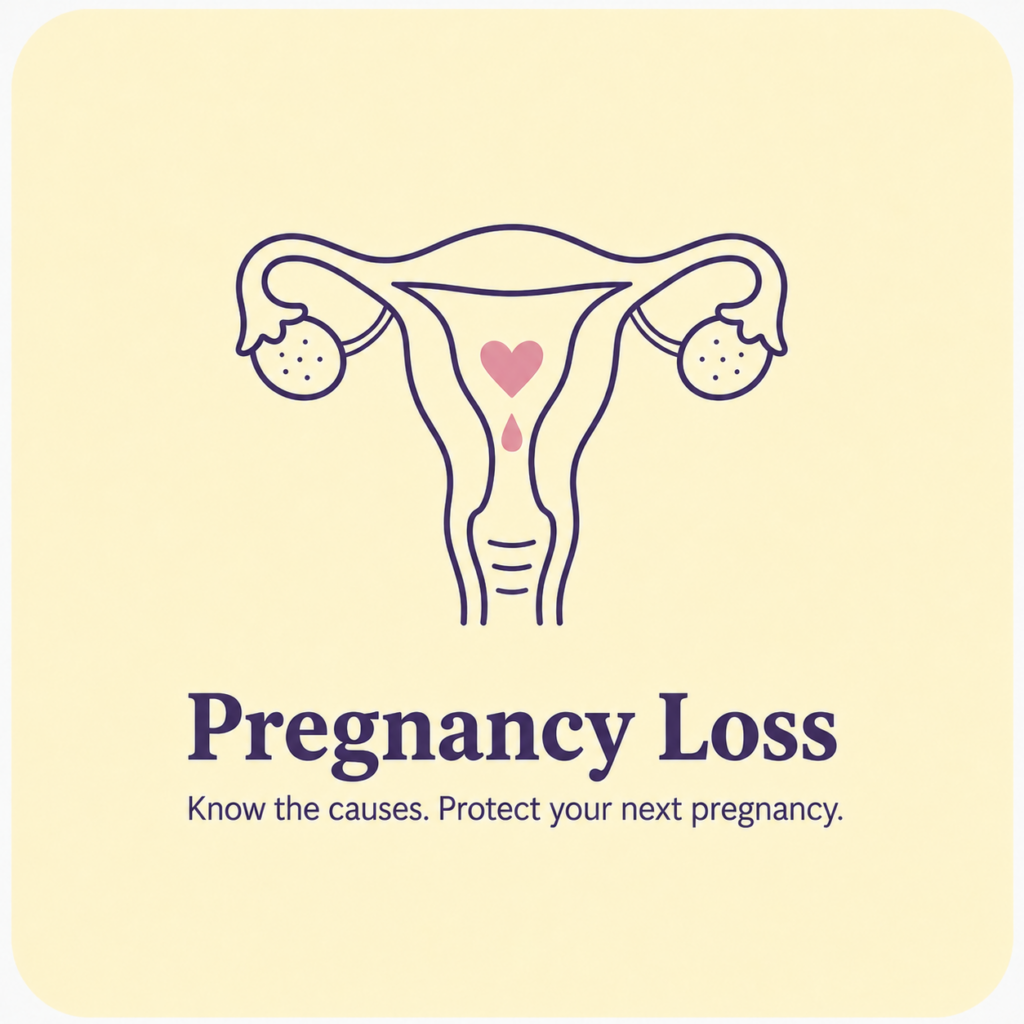



Pregnancy Loss: Causes, Essential Evaluations, and the Chance of a Healthy Pregnancy
A positive pregnancy test can change the shape of the future within minutes.
Even before an ultrasound, a visible bump, or a conversation with family and friends, many people begin imagining what might come next. They may calculate a due date, think about names, change daily habits, or quietly picture themselves holding a baby.
When that pregnancy ends, the grief can be real and overwhelming—no matter how early the loss occurred or how few people knew about it.
Pregnancy loss is common, but the fact that it happens frequently does not make it emotionally simple. Some people feel sadness, anger, confusion, guilt, or fear that their body has failed them. Others immediately begin reviewing everything they ate, lifted, felt, or did in the days before the loss.

Was it the exercise class?
The long flight?
Sexual intercourse?
A stressful argument?
A cup of coffee?
A day spent working too hard?
In most cases, the answer is no.
Many pregnancy losses happen because of biological events that neither parent could have predicted or prevented. Experiencing one loss—and even experiencing more than one—does not automatically mean that a healthy pregnancy will never happen.
At the same time, repeated pregnancy loss should not be dismissed with the advice to “just try again.” After two losses, a structured medical evaluation may be appropriate, particularly when age, medical history, the timing of the losses, or other risk factors suggest that waiting could mean losing valuable time.
Download the DLady app
What Does Pregnancy Loss Mean?
The terminology used for pregnancy loss is not the same in every country or healthcare system.
The phrase early pregnancy loss usually refers to a pregnancy that ends during the first trimester. The word miscarriage may be used for losses occurring later, but the exact gestational-age limit varies across guidelines.
For international reporting, the World Health Organization commonly uses 28 completed weeks as the threshold for stillbirth. Other healthcare systems may use 20, 22, or 24 weeks.
The American Society for Reproductive Medicine uses pregnancy loss before 22 weeks when discussing recurrent pregnancy loss.
These differences can be confusing, especially when a patient reads information from several countries. But the terminology does not change the reality of what happened.
Whether the pregnancy ended at five weeks, twelve weeks, or later, the person deserves:
- A clear explanation
- Safe medical care
- Respectful communication
- Time to ask questions
- Appropriate emotional support
The stage of pregnancy may affect the medical evaluation and treatment, but it should not be used to minimise the loss.
What Is a Chemical Pregnancy?
A chemical pregnancy is a very early pregnancy that is confirmed by a positive urine or blood pregnancy test but ends before it can be clearly identified on ultrasound.
It may appear as a period that arrives several days late and is heavier or more painful than expected. In other cases, the person knows about the pregnancy because she tested before her expected period.
Home pregnancy tests are more sensitive than they were in the past. As a result, very early pregnancies are now detected more often, including pregnancies that might previously have been mistaken for a slightly delayed menstrual period.
A chemical pregnancy is still a pregnancy loss.
The fact that it happened early does not mean that the hope, attachment, or grief was insignificant.
Chemical pregnancies have also become more important in medical definitions. Under the updated 2026 ASRM definition, pregnancies confirmed only by urine or blood hCG may be included when determining whether someone has experienced recurrent pregnancy loss.
Ultrasound confirmation is no longer required in every case.
Confirmed ectopic pregnancies and molar pregnancies are not included in this definition because they require separate forms of evaluation and management.
What Are the Possible Symptoms of Pregnancy Loss?
Pregnancy loss does not always happen in the same way.
Possible symptoms include:
- Vaginal bleeding or spotting
- Period-like cramps
- Lower abdominal or pelvic pain
- Lower-back pain
- Passing blood clots or tissue
- A decrease in some pregnancy symptoms
- Ultrasound findings showing that development has stopped
- An ultrasound showing that a previously detected heartbeat is no longer present
Bleeding does not always mean that a pregnancy is ending.
Some people experience spotting during a healthy pregnancy, particularly in the first trimester. The cervix may also bleed more easily during pregnancy.
The opposite situation is also possible. A pregnancy may stop developing without immediate bleeding or pain. This is sometimes called a missed miscarriage and may first be identified during an ultrasound.
The disappearance of nausea, breast tenderness, or other pregnancy symptoms is also not enough by itself to diagnose a loss. Pregnancy symptoms can naturally fluctuate.
A diagnosis should be based on appropriate medical assessment, which may include ultrasound, repeat hCG testing, physical examination, and the timing of the pregnancy.
Which Symptoms Require Immediate Medical Attention?
Some symptoms should never be managed at home without medical advice.
Urgent assessment is needed when there is:
- Heavy bleeding that quickly soaks pads
- Severe abdominal or pelvic pain
- Pain mainly on one side
- Shoulder-tip pain
- Dizziness, fainting, confusion, or severe weakness
- Shortness of breath or strong heart palpitations
- Fever or chills
- Foul-smelling vaginal discharge
- Persistent vomiting
- Pain with a positive pregnancy test when the location of the pregnancy has not been confirmed
These symptoms may be associated with significant blood loss, infection, ovarian torsion, or an ectopic pregnancy.
An ectopic pregnancy occurs when a pregnancy implants outside the main cavity of the uterus, most commonly in a fallopian tube.
An ectopic pregnancy can rupture and cause life-threatening internal bleeding. It must not be assumed to be an ordinary miscarriage.
A person with a positive pregnancy test and severe one-sided pain, shoulder pain, weakness, or fainting needs immediate medical care.
What Causes Pregnancy Loss?
There is not always one identifiable cause.
In many cases, the pregnancy ends because the embryo could not continue developing normally. In other cases, the loss may be related to uterine structure, an autoimmune condition, a hormonal or metabolic disease, genetic factors, or several smaller factors occurring together.
Sometimes, even after a complete evaluation, no specific cause is found.
That does not mean that the loss was imaginary, that the evaluation failed, or that a healthy pregnancy is unlikely in the future.
Chromosomal Abnormalities in the Embryo
Chromosomal abnormalities are the most common explanation for early pregnancy loss.
Human cells usually contain 46 chromosomes. An embryo may receive too many or too few chromosomes, or part of a chromosome may be missing, duplicated, or rearranged.
These abnormalities usually occur randomly during the formation of the egg or sperm or during the earliest divisions of the embryo.
When the chromosomal change is not compatible with normal development, the pregnancy may stop.
This is generally not caused by:
- Exercise
- Sexual intercourse
- Travel
- Lifting an ordinary object
- A stressful conversation
- Working
- A particular food
- Not resting enough
Approximately half or more of first-trimester miscarriages may involve a chromosome-number abnormality in the embryo.
The risk rises with the age of the egg, but chromosomal abnormalities can occur at any age.
Maternal Age
Age is one of the strongest factors associated with early pregnancy loss.
As a woman becomes older, especially from the mid-to-late thirties onward, a larger proportion of her eggs may contain an abnormal number of chromosomes.
This can increase both the time needed to become pregnant and the likelihood that an early pregnancy will not continue.
However, age is a risk factor—not a prediction.
Many women over 35 have healthy pregnancies. At the same time, younger women can also experience pregnancy loss.
Age should be considered alongside the complete medical and reproductive history rather than used as the sole explanation for every loss.
Parental Chromosome Changes
In a small proportion of couples, one partner carries a balanced chromosomal rearrangement, such as a balanced translocation.
The carrier is usually healthy because no important genetic material is missing or duplicated in their own cells. However, some eggs or sperm may receive an unbalanced chromosome combination.
This can result in:
- Failure of implantation
- Pregnancy loss
- A pregnancy affected by a chromosome condition
- A healthy pregnancy
A balanced chromosome change does not mean that having a healthy baby is impossible.
When such a change is identified, genetic counselling can explain the likely outcomes and available options, including natural conception, prenatal diagnosis, IVF with specialised embryo testing, or the use of donor eggs or sperm in selected circumstances.
Structural Conditions of the Uterus
The shape and internal cavity of the uterus may affect a pregnancy.
Conditions that may be relevant include:
- A uterine septum
- Certain fibroids that distort the uterine cavity
- Intrauterine adhesions
- Retained pregnancy tissue
- Polyps in particular locations
- Certain congenital differences in uterine shape
Not every fibroid, polyp, or anatomical difference causes miscarriage.
A fibroid located on the outer surface of the uterus may have a very different effect from one that pushes into the uterine cavity.
Treatment decisions should consider:
- Location
- Size
- Effect on the uterine cavity
- Symptoms
- Previous pregnancy history
- Available evidence that treatment may improve the chance of live birth
Finding an abnormality does not automatically mean that surgery is necessary.
Antiphospholipid Syndrome
Antiphospholipid syndrome, or APS, is an autoimmune condition associated with blood clots and certain pregnancy complications.
APS can be linked to repeated early losses, later fetal death, severe placental complications, or a personal history of thrombosis.
Diagnosis requires both an appropriate clinical history and specific blood-test findings.
The laboratory assessment usually includes:
- Lupus anticoagulant
- Anticardiolipin IgG and IgM
- Anti-beta-2-glycoprotein I IgG and IgM
An abnormal result usually needs to remain positive when repeated at least 12 weeks later before APS can be confirmed.
When the diagnosis is established, medically supervised treatment using low-dose aspirin and heparin during pregnancy may improve outcomes.
This does not mean that aspirin or blood-thinning injections should be used after every miscarriage.
If APS testing is negative and there is no other medical indication, aspirin and heparin have not been shown to prevent unexplained recurrent pregnancy loss and may increase bleeding risk.
Thyroid Disease and Diabetes
Uncontrolled thyroid disease and poorly controlled diabetes can increase the risk of pregnancy complications.
Overt underactive or overactive thyroid disease should be treated before another pregnancy.
However, a mildly unusual result should not automatically be blamed for the loss without careful interpretation.
Updated guidance does not recommend treating a person solely because thyroid-peroxidase antibodies are present when thyroid function is otherwise normal.
Diabetes testing may be appropriate when risk factors are present, such as:
- Obesity
- Polycystic ovary syndrome
- Previous gestational diabetes
- A strong family history
- Symptoms of high blood sugar
- Age over 40
The purpose of testing is to identify clinically meaningful disease that can be treated—not to create guilt around every laboratory value.
Infections
Some infections can cause pregnancy complications.
However, broad infection panels are not helpful for every person who has experienced a miscarriage.
Testing should be based on:
- Symptoms
- Medical history
- Examination findings
- Exposure risks
- The stage and circumstances of the loss
Routine testing for every possible virus, bacterium, or parasite can produce confusing results and unnecessary anxiety.
Antibiotics should not be prescribed without a valid diagnosis. Unnecessary antibiotic use can cause side effects and contribute to antimicrobial resistance.
Chronic Endometritis
Chronic endometritis is persistent inflammation of the uterine lining. Unlike an acute uterine infection, it may cause few or no obvious symptoms.
In selected people with otherwise unexplained recurrent pregnancy loss, particularly when infertility is also present, a specialist may consider testing for chronic endometritis.
The most studied method involves an endometrial biopsy examined for plasma cells, often using CD138 staining.
The evidence is still developing. Testing methods and diagnostic thresholds are not fully standardised.
Commercial vaginal or uterine microbiome panels are not equivalent to a validated biopsy and should not automatically be presented as a standard recurrent-miscarriage test.
Male and Sperm-Related Factors
Pregnancy loss is not only a women’s health issue.
The male partner contributes half of the embryo’s genetic material. Male reproductive health should therefore be included in the evaluation.
Relevant factors may include:
- Paternal age
- Smoking
- Shisha use
- Heavy alcohol consumption
- Recreational drugs
- Certain medications
- Obesity
- Poorly controlled medical conditions
- Extreme or repeated heat exposure
- Varicocele
- Abnormal semen parameters
- Occupational or environmental exposures
A semen analysis may be appropriate, particularly when the couple is also experiencing difficulty becoming pregnant.
Sperm DNA-fragmentation testing may be considered in selected cases of otherwise unexplained recurrent pregnancy loss or when repeated loss occurs together with infertility.
It is not required after every isolated miscarriage.
Even when sperm DNA fragmentation is elevated, evidence that a particular treatment will prevent another loss remains limited. Results should therefore be interpreted by a specialist rather than used to sell supplements or procedures with uncertain benefit.
Does Stress Cause Pregnancy Loss?
Ordinary stress, worry, grief, an argument, work pressure, or one emotionally difficult day is not usually a direct cause of pregnancy loss.
Telling a woman that she miscarried because she was “too stressed” can deepen guilt without reflecting medical evidence.
Severe and chronic stress may affect:
- Sleep
- Appetite
- Mental health
- Alcohol or tobacco use
- Medication adherence
- Relationships
- General health behaviours
For those reasons, emotional support matters.
But a person should not be told that she lost the pregnancy because she failed to remain calm or positive.
Grief itself can also cause stress. The presence of distress after a loss does not prove that distress caused the loss.
Can Exercise, Sex, Travel, or Working Cause Miscarriage?
In an uncomplicated pregnancy, normal daily activity, walking, appropriate exercise, working, travel, and sexual intercourse do not usually cause miscarriage.
The uterus is not so fragile that an ordinary movement or activity can dislodge a healthy pregnancy.
A doctor may recommend temporary restrictions in specific situations, such as:
- Significant bleeding
- Cervical insufficiency
- Placenta previa later in pregnancy
- Certain maternal medical conditions
- A specific pregnancy complication
These recommendations should be individualised.
Strict bed rest has not been shown to prevent early pregnancy loss in the general population. Prolonged inactivity can increase the risk of:
- Blood clots
- Muscle weakness
- Reduced fitness
- Constipation
- Anxiety and low mood
Being advised to rest briefly because of symptoms is different from being told to remain in bed for weeks without a clear medical reason.
What Is Recurrent Pregnancy Loss?
There is no single definition used by every professional organisation.
The American Society for Reproductive Medicine defines recurrent pregnancy loss as the spontaneous loss of two or more pregnancies.
The losses do not need to occur consecutively.
Under its updated 2026 definition, pregnancies confirmed only through urine or blood hCG may also be included. This means that chemical pregnancies can be medically relevant when reviewing a pattern of repeated losses.
ACOG also supports beginning a thorough evaluation after two miscarriages.
RCOG continues to use three or more early miscarriages in its formal definition. However, it allows clinicians to begin evaluation after two losses when the pattern appears more likely to reflect an underlying cause than separate random events.
The practical message is important:
A person should not automatically be told to experience another loss before receiving medical attention.
After How Many Losses Should Testing Begin?
An evaluation can reasonably begin after two pregnancy losses.
Earlier or more urgent assessment may be appropriate when there is:
- Higher maternal age
- A second-trimester loss
- A history of ectopic or molar pregnancy
- A personal history of blood clots
- A known autoimmune condition
- A known uterine abnormality
- Previous cancer treatment
- A family history of chromosome disorders
- Prolonged difficulty becoming pregnant
- Known male reproductive-health concerns
- A loss shown to involve a chromosomally normal pregnancy
- Severe emotional distress related to previous losses
The number of tests should not be determined only by the number of miscarriages.
The person’s age, complete pregnancy history, gestational age at each loss, ultrasound findings, pathology reports, medical conditions, and fertility history all matter.
What Does a Recurrent Pregnancy Loss Evaluation Include?
A useful evaluation begins with the history—not with ordering every test available.
The clinician may review:
- All previous pregnancies
- Whether each pregnancy was confirmed by hCG, ultrasound, or pathology
- The gestational age at each loss
- Whether a heartbeat had been detected
- Ultrasound and laboratory records
- Pathology or chromosome results
- Menstrual and ovulation history
- Medical and surgical history
- Medication and supplement use
- Personal or family history of blood clots
- Family history of miscarriage or genetic conditions
- The male partner’s health and fertility history
- How long the couple has been trying to conceive
Testing should then be selected according to the findings.
Chromosome Testing of Pregnancy Tissue
When technically possible, chromosome testing of the pregnancy tissue may be offered after a second miscarriage or in someone with recurrent pregnancy loss.
Newer array-based tests can sometimes identify whether the pregnancy had an abnormal number or arrangement of chromosomes.
Finding a random chromosomal abnormality may:
- Provide an explanation
- Reduce unnecessary self-blame
- Prevent some unhelpful investigations
- Guide whether parental chromosome testing is needed
A chromosomally normal result may suggest that investigation of uterine, autoimmune, or other factors deserves more attention.
The test does not always produce a result. The sample may contain too little pregnancy tissue or may be contaminated with the mother’s cells.
The limitations should be explained before testing.
Assessment of the Uterine Cavity
Evaluation of the uterine cavity is an important part of recurrent pregnancy loss care.
A standard pelvic ultrasound is useful, but it may not show every abnormality inside the cavity.
Depending on the circumstances, the assessment may include:
- Three-dimensional ultrasound
- Saline-infusion sonography
- Hysterosalpingography
- Hysteroscopy
Hysteroscopy allows a doctor to look directly inside the uterine cavity and, in some cases, treat an abnormality during the same procedure.
The choice depends on the suspected condition, local expertise, previous results, cost, and the person’s preferences.
Parental Chromosome Testing
A blood karyotype is not necessarily the first genetic test needed by every couple.
Parental chromosome testing may be particularly useful when:
- Pregnancy-tissue testing identifies an unbalanced structural rearrangement
- Pregnancy tissue was not available for testing
- There is a family history suggesting a chromosome condition
- The pattern of loss raises concern about an inherited structural change
If one partner carries a balanced rearrangement, referral to a genetic counsellor is appropriate.
Which Tests Are Not Routinely Recommended?
More tests do not always mean better care.
The following are generally not recommended as routine tests for every person with recurrent pregnancy loss:
- MTHFR testing
- Broad inherited-thrombophilia panels
- Protein C testing solely because of miscarriage
- Protein S testing solely because of miscarriage
- Antithrombin testing solely because of miscarriage
- Natural-killer-cell testing
- Broad immune panels without a specific clinical indication
- Routine thyroid-antibody testing when thyroid function is normal
- Endometrial-receptivity tests
- Routine vaginal or uterine microbiome panels
- Routine mycoplasma or ureaplasma testing
- Prolactin testing without symptoms such as irregular ovulation or unexpected milk discharge
Some of these tests may be relevant for a separate medical reason.
They should not be sold as a standard “miscarriage package” for every couple.
Poorly validated tests can lead to:
- Unnecessary expense
- Anxiety
- False diagnoses
- Unproven treatments
- Medication side effects
- Delays in trying again
Can Progesterone Prevent Another Miscarriage?
Progesterone is essential for supporting early pregnancy, but giving progesterone to every person with a previous loss has not consistently been shown to prevent miscarriage.
The clearest recommendation applies to a specific group.
NICE recommends vaginal micronised progesterone at a dose of 400 mg twice daily when:
- An intrauterine pregnancy has been confirmed by ultrasound
- Vaginal bleeding is occurring in the current pregnancy
- The person has experienced at least one previous miscarriage
If a fetal heartbeat is confirmed, NICE recommends continuing treatment until 16 completed weeks.
Evidence has not shown the same clear benefit for:
- Women who have bleeding but no previous miscarriage
- Women with a previous miscarriage but no bleeding in the current pregnancy
ASRM states that vaginal progesterone may be considered in early pregnancy when bleeding is present or in some people with otherwise unexplained recurrent loss, using shared decision-making.
Progesterone should be prescribed by a clinician.
A single low progesterone blood result does not always prove that progesterone caused the loss. In many failing pregnancies, progesterone falls because the pregnancy has already stopped developing.
Should Aspirin or Heparin Be Used?
Aspirin and heparin have a clear role for some people with confirmed antiphospholipid syndrome.
They should not be used automatically after one or more miscarriages when APS has not been diagnosed.
Using blood-thinning medication without a valid indication can cause:
- Bleeding
- Bruising
- Allergic reactions
- Heparin-related complications
- Problems around surgery or delivery
“A baby aspirin cannot hurt” is not always true.
Treatment should be based on a recognised diagnosis and supervised by the appropriate medical team.
What Happens After a Miscarriage Is Confirmed?
Once the pregnancy loss has been confirmed and ectopic pregnancy has been excluded, there are usually three main options:
- Expectant management
- Medical management
- Surgical management
No single option is best for everyone.
The choice depends on:
- Bleeding
- Pain
- Evidence of infection
- Gestational age
- Medical history
- Previous experiences
- Access to emergency care
- The person’s emotional needs
- Personal preference
A clinically stable person should be given enough information and time to make an informed decision whenever possible.
Expectant Management
Expectant management means waiting for the body to pass the pregnancy tissue naturally.
For many stable patients, NICE recommends an initial waiting period of approximately seven to fourteen days.
Bleeding may be heavier than a normal period and may include clots or tissue. Cramping can range from mild to intense.
The patient should receive clear information about:
- The amount of bleeding that may occur
- Pain relief
- How long the process may take
- When to contact the clinic
- When to seek emergency care
- How follow-up will be arranged
Expectant management may be less suitable when there is:
- Heavy bleeding
- Infection
- A bleeding disorder
- Significant anaemia
- Clinical instability
- Limited access to emergency care
- A previous traumatic experience that makes waiting unacceptable
Choosing not to wait is a valid preference.
Medical Management
Medication can be used to help the uterus pass pregnancy tissue.
For a missed miscarriage, current NICE guidance recommends mifepristone followed by misoprostol. This combination is more effective than misoprostol alone and reduces the likelihood that the pregnancy sac will remain.
For an incomplete miscarriage, misoprostol is generally used without mifepristone.
The medication, dose, timing, and route vary according to the clinical situation and local protocol.
These medicines should be used only with instructions from a qualified healthcare professional.
Medical care should also include:
- Appropriate pain relief
- Medication for nausea when needed
- Information about expected bleeding
- A number to call with questions
- Clear emergency instructions
- Follow-up
Medication does not work completely in every case. Some people later need another dose or a surgical procedure.
Surgical Management
Surgical evacuation may be medically necessary or personally preferred.
It may be recommended when there is:
- Heavy or ongoing bleeding
- Infection
- Clinical instability
- Retained pregnancy tissue
- Failure of expectant management
- Failure of medical treatment
- A need to obtain pregnancy tissue for testing
- A clear patient preference for a faster, more predictable process
Depending on the setting, options may include:
- Manual vacuum aspiration under local anaesthesia
- Surgical evacuation in an operating theatre under general anaesthesia
The person should receive information about:
- Anaesthesia
- Pain
- Bleeding
- Recovery
- Infection risk
- The small risk of uterine injury
- The small risk of intrauterine adhesions
- The possibility of retained tissue
The patient’s emotional experience during the procedure also matters. Respectful communication, privacy, and trauma-informed care should be part of treatment.
What Follow-Up Is Needed?
After expectant or medical management, a home urine pregnancy test is commonly recommended at approximately three weeks.
A positive test requires medical review.
Possible explanations include:
- Retained pregnancy tissue
- A continuing pregnancy
- An ectopic pregnancy
- A molar pregnancy
- hCG that is falling more slowly than expected
Medical assessment is also needed when the test is negative but the person continues to have:
- Heavy bleeding
- Pelvic pain
- Fever
- Foul-smelling discharge
- Severe weakness
- Other concerning symptoms
A negative test does not mean that emotional recovery should already be complete.
Does an RhD-Negative Person Need Anti-D?
Recommendations about Anti-D immunoglobulin have changed and differ between healthcare systems.
Under NICE guidance updated in June 2026, routine Anti-D is not recommended for miscarriage, threatened miscarriage, or ectopic pregnancy up to and including 11 weeks and 6 days, regardless of whether management is expectant, medical, or surgical.
From 12 weeks onward, recommendations change.
For an RhD-negative person between 12 weeks and 12 weeks plus 6 days, NICE recommends Anti-D when medical or surgical management is used for miscarriage or ectopic pregnancy. It may also be considered when threatened miscarriage causes heavy or recurrent bleeding.
Protocols after 13 weeks and requirements in other countries may differ.
Hospitals and fertility centres in the UAE may follow approved national or institutional protocols. Patients should follow the guidance of the treating medical team rather than relying on an older instruction found online.
When Can Someone Try to Become Pregnant Again?
After an uncomplicated early pregnancy loss, there is often no medical reason to wait for several months before trying again.
The appropriate time depends on:
- The end of heavy bleeding
- Physical recovery
- Whether infection or surgery occurred
- Whether hCG has returned to an appropriate level
- The results of any planned evaluation
- Medication used
- The person’s emotional readiness
Ovulation may return before the first menstrual period, so pregnancy can happen soon after a loss.
Some clinicians advise waiting until after one period because it may make the next pregnancy easier to date. This is not always medically necessary.
A longer delay may be advised after:
- Ectopic pregnancy
- Molar pregnancy
- Methotrexate treatment
- Infection
- Significant anaemia
- Certain surgeries
- A later pregnancy loss
- A specific medical complication
Emotional readiness is personal.
Some people want to try again quickly because waiting feels more painful. Others need weeks, months, or longer.
Neither response is wrong.
What Care May Help Before the Next Pregnancy?
Before trying again, it may be useful to:
- Review prescription and non-prescription medication
- Take folic acid according to medical advice
- Manage thyroid disease
- Improve diabetes control
- Manage high blood pressure
- Stop smoking and shisha use
- Avoid recreational drugs
- Avoid alcohol when trying to conceive and during pregnancy
- Work gradually toward a healthy weight
- Get appropriate physical activity
- Maintain regular sleep
- Review vaccination status
- Attend genetic counselling when indicated
- Plan early contact with the pregnancy-care team
No diet, supplement, injection, or herbal product can guarantee that the next pregnancy will continue.
Products marketed as “miscarriage prevention” should be approached cautiously, especially when evidence, dosage, safety, or ingredients are unclear.
Are IVF and Embryo Genetic Testing Necessary?
IVF is not an automatic treatment for recurrent pregnancy loss.
IVF may be appropriate when infertility is also present, the fallopian tubes are blocked, ovarian reserve is declining, a serious male factor exists, or a specific genetic situation makes embryo testing relevant.
But recurrent miscarriage alone does not mean that IVF is always the best next step.
What Is PGT-A?
Preimplantation genetic testing for aneuploidy, or PGT-A, examines cells taken from an IVF embryo to estimate whether the embryo has the expected number of chromosomes.
It may reduce the transfer of some embryos with chromosome-number abnormalities.
However, it cannot identify every possible cause of miscarriage or guarantee a healthy baby.
ASRM’s 2026 review found that IVF with PGT-A has not been proven in prospective studies to significantly improve the overall live-birth rate or shorten the path to a successful pregnancy for all people with recurrent pregnancy loss compared with continued natural attempts.
Some studies report better outcomes per embryo transfer. However, those figures may exclude IVF cycles in which:
- Few eggs were collected
- No blastocyst developed
- All tested embryos were abnormal
- No embryo was available for transfer
Success per embryo transfer is not the same as success per IVF cycle started.
PGT-A may be discussed in selected situations, including some women over 40 who have had a confirmed chromosomally abnormal miscarriage.
What Is PGT-SR?
PGT-SR is embryo testing for structural chromosome rearrangements.
It may be relevant when one parent carries a balanced chromosome translocation or another structural rearrangement.
The decision to use IVF and embryo testing should consider:
- Maternal age
- Previous chromosome results
- Ovarian reserve
- The presence of infertility
- The expected number of embryos
- Cost
- Time
- Emotional burden
- The possibility of having no embryo to transfer
- The couple’s preferences
IVF can be valuable for some couples, but it should not be presented as the only reasonable path after repeated pregnancy loss.
What Is the Chance of a Healthy Pregnancy in the Future?
Even when no specific cause is found, the chance of a future healthy pregnancy may remain good.
ASRM notes that many people with recurrent pregnancy loss eventually have a successful pregnancy without a specific medical intervention. Estimates commonly range from approximately 50% to 80%, depending heavily on age and complete pregnancy history.
The individual outlook is influenced by:
- Maternal age
- Number of previous losses
- Gestational age at each loss
- Previous live births
- Pregnancy-tissue chromosome results
- Uterine findings
- Medical conditions
- Male reproductive health
- Other fertility factors
A statistic cannot predict exactly what will happen to one person.
However, the absence of an identified cause does not mean that another loss is inevitable.
Psychological Support Is Part of Medical Care
Pregnancy loss is both a physical and emotional event.
A person may experience:
- Grief
- Anger
- Guilt
- Numbness
- Anxiety
- Difficulty sleeping
- Fear of becoming pregnant again
- Jealousy toward pregnant friends or relatives
- Withdrawal from social situations
- Loss of trust in the body
- Strain within the relationship
Partners may grieve differently.
One person may want to talk, while the other becomes quiet. One may want to try again quickly, while the other needs more time.
Different responses do not necessarily mean that one partner cared more.
Comments intended to be reassuring can still cause pain.
Phrases such as:
- “At least it was early.”
- “You can try again.”
- “Everything happens for a reason.”
- “Maybe it was for the best.”
- “Try not to think about it.”
may make the person feel that the loss is being minimised.
More supportive statements include:
- “I am sorry this happened.”
- “I know this pregnancy mattered to you.”
- “You do not need to explain how you feel.”
- “I am here if you want to talk.”
- “What would feel most helpful today?”
Professional mental-health support should be sought when grief is becoming difficult to manage or when there is:
- Persistent inability to sleep
- Panic attacks
- Severe depression
- Feelings of worthlessness
- Inability to perform basic daily activities
- Thoughts of self-harm
- Thoughts of suicide
Urgent support is necessary if the person may be in immediate danger.
Conclusion
Pregnancy loss is not only a medical diagnosis. It is the ending of a pregnancy that may already have changed how a person imagined the future.
It should not be met with blame, silence, or oversimplified reassurance.
In many early losses, the cause is a random chromosomal abnormality that neither parent could have prevented.
After two pregnancy losses, a structured evaluation may be appropriate. The evaluation should include both partners and should focus on tests supported by evidence—not every immune, clotting, hormonal, genetic, or microbiome test available commercially.
Potentially useful areas of assessment include:
- Chromosome testing of pregnancy tissue
- The uterine cavity
- Antiphospholipid syndrome
- Clinically meaningful thyroid or metabolic disease
- Parental chromosome testing in selected situations
- Male reproductive health
Treatment should match the diagnosis.
Progesterone may help a specific group of women with bleeding in a current pregnancy and a previous miscarriage. Aspirin and heparin may improve outcomes in confirmed antiphospholipid syndrome. Neither should be prescribed automatically to everyone.
IVF and embryo genetic testing can be valuable in selected circumstances, but they cannot eliminate every cause of miscarriage and are not mandatory for all couples with recurrent loss.
Even when no clear cause is found, many people will later have a healthy pregnancy.
Perhaps the most important message is this:
The loss was real, the grief is valid, and in most cases it was not your fault.
Good care should protect physical health, support emotional recovery, respect informed choices, involve both partners, and provide clear information without making promises that medicine cannot guarantee.
Download the DLady app for trusted reproductive-health education, fertility awareness, pregnancy support, and personalised guidance.
Does one pregnancy loss mean there is a serious fertility problem?
No. Many pregnancy losses are caused by a random chromosomal abnormality and do not happen again. However, age, medical history, gestational age at the loss, and other risk factors should be considered.
Does bleeding during pregnancy always mean miscarriage?
No. Some healthy pregnancies involve spotting or mild bleeding. However, bleeding should be evaluated according to its severity, associated pain, gestational age, and the person’s overall condition.
Can everyday stress or normal activity cause pregnancy loss?
Usually not. Ordinary stress, working, walking, appropriate exercise, or sexual intercourse do not normally cause pregnancy loss in an uncomplicated pregnancy.
What is a chemical pregnancy?
A chemical pregnancy occurs when hCG produces a positive pregnancy test, but the pregnancy ends before it can be clearly identified on ultrasound.
After how many losses should an evaluation begin?
Many current approaches consider specialist evaluation after two clinically recognised pregnancy losses, especially when they are consecutive. Evaluation may begin earlier when age or other risk factors are present.
When can someone try to conceive again after pregnancy loss?
In many uncomplicated cases, there is no medical need for a long delay. The appropriate timing depends on the end of bleeding, physical recovery, the possible cause, and emotional readiness.
Is a healthy pregnancy possible after pregnancy loss?
Yes. Even when no specific cause is identified, many couples later have a healthy pregnancy.
Can aspirin prevent pregnancy loss?
Not for everyone. Aspirin or anticoagulant treatment may be prescribed in specific situations, such as confirmed antiphospholipid syndrome. Taking it without medical supervision may increase the risk of bleeding.
Is IVF necessary after pregnancy loss?
No. IVF is not an automatic treatment after pregnancy loss. The decision should consider age, possible causes, the fertility status of both partners, cost, limitations, and probability of success.