


Endometriosis and Fertility: Hidden Symptoms, Diagnosis, Treatment, and Chances of Pregnancy
Introduction
Severe period pain, pain during sexual intercourse, persistent pelvic discomfort, or difficulty becoming pregnant are not problems that women should be expected to accept as a normal part of life. These symptoms may have different causes, and one of the most important possible causes is endometriosis.
Endometriosis is a chronic condition that may begin during adolescence and affect physical health, emotional well-being, intimate relationships, daily activities, and fertility. Despite the significant prevalence of the condition, diagnosis is delayed in many women because menstrual pain is sometimes normalised or because the symptoms are mistaken for digestive, urinary, or other health conditions.

Endometriosis does not necessarily mean infertility. Many women with endometriosis become pregnant naturally. However, in some individuals, the condition may reduce the likelihood of pregnancy or increase the amount of time needed to conceive. Timely diagnosis, appropriate evaluation, and treatment tailored to each individual can help prevent the loss of valuable time and avoid unnecessary interventions.
What Is Endometriosis?
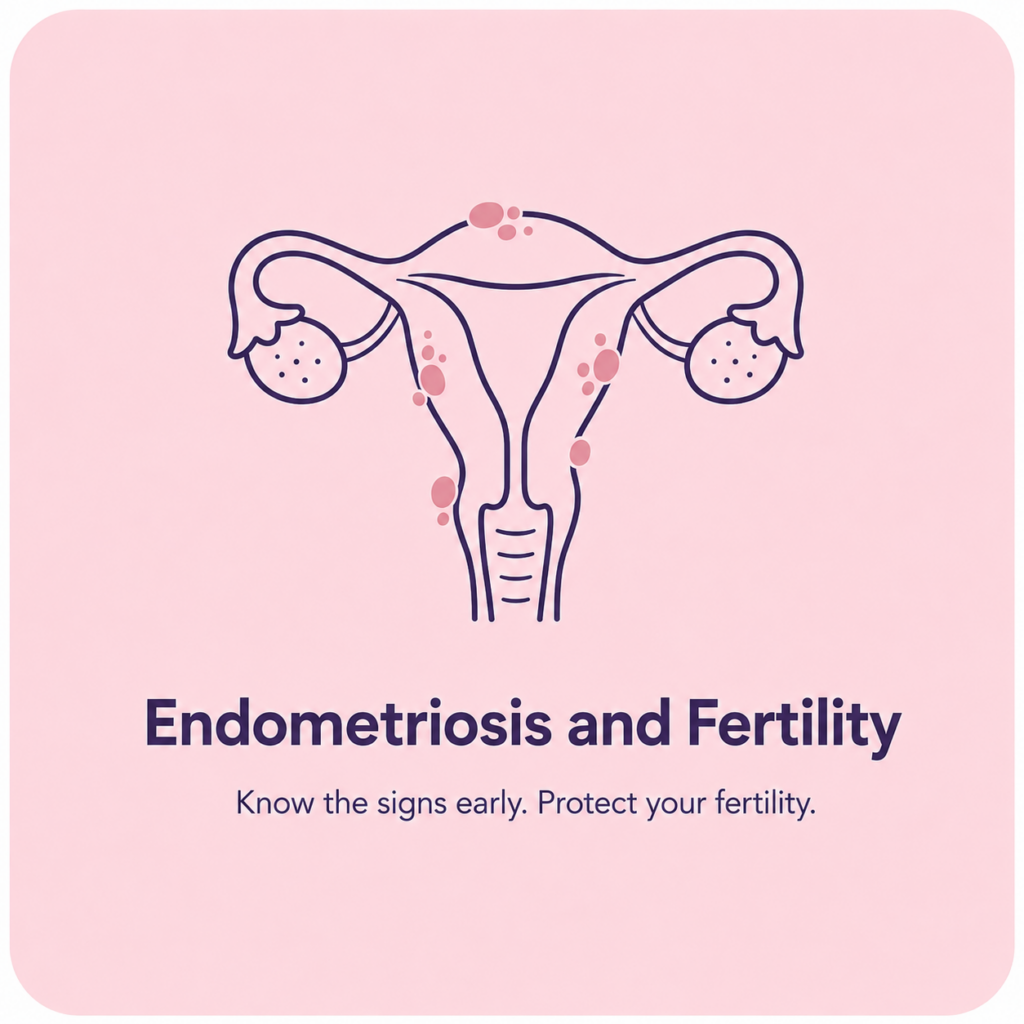
In endometriosis, tissue similar to the inner lining of the uterus grows outside the uterus. This tissue may be found around the ovaries, fallopian tubes, outer surface of the uterus, pelvic cavity, bowel, or bladder.
These lesions can respond to hormonal changes and may cause inflammation, pain, scar tissue, and adhesions. In some cases, cysts develop in the ovaries. These cysts are known as endometriomas.
Endometriosis is not an infection, is not considered cancer, and is not transmitted through sexual contact. Having endometriosis is also not the individual’s fault and is not the direct result of a particular behaviour.
The World Health Organization estimates that approximately 10% of women and girls of reproductive age worldwide are living with endometriosis. The severity of the condition and its symptoms are not the same in every person.
Possible Symptoms of Endometriosis
The symptoms of endometriosis can vary from one person to another. Some women experience severe pain, while others have no obvious symptoms and are diagnosed during a fertility evaluation or surgical procedure.
Possible symptoms include:
- Severe pain before or during menstruation
- Chronic pelvic pain
- Pain during or after sexual intercourse
- Pain during bowel movements or urination, especially during menstruation
- Heavy or prolonged menstrual bleeding
- Spotting between periods
- Periodic bloating, constipation, diarrhoea, or nausea
- Persistent fatigue
- Back or leg pain
- Difficulty becoming pregnant
The severity of pain does not always indicate the severity or extent of the condition. A person may have limited lesions but severe pain, while another person with extensive disease may experience only mild symptoms.
Is a Very Painful Period Normal?
Mild to moderate cramping at the beginning of menstruation is common. However, pain that causes absence from school or work, disrupts sleep, leads to vomiting or severe weakness, or requires frequent pain medication should be investigated.
Normalising severe pain can delay the diagnosis of conditions such as endometriosis, adenomyosis, uterine fibroids, or pelvic infections.
Medical evaluation is advisable when pain gradually becomes more severe, starts before menstrual bleeding begins, continues after the period ends, or occurs during sexual intercourse.
How Does Endometriosis Affect Fertility?
Pregnancy depends on several coordinated steps: ovulation, movement of the egg through the fallopian tube, sperm reaching the egg, fertilisation, movement of the early embryo into the uterus, and implantation in the endometrium.
Endometriosis may affect this process through several mechanisms.
1. Inflammation in the Pelvic Environment
Endometriosis may create an inflammatory environment in the pelvis. This inflammation may affect the function of the egg, sperm, fallopian tubes, or the fertilisation process.
However, the extent of this effect is not the same in every individual.
2. Adhesions and Changes in Pelvic Anatomy
Scar tissue and adhesions may change the position of an ovary or fallopian tube. In severe cases, it may become more difficult for the egg to enter the fallopian tube, or the tubes may become blocked.
3. Ovarian Endometrioma
An endometriosis-related cyst may involve ovarian tissue. The condition itself, as well as certain ovarian surgeries, may affect ovarian reserve.
For this reason, the decision to operate on an endometrioma should take into account age, pain, the size and appearance of the cyst, previous surgical history, ovarian reserve, and pregnancy plans.
4. Possible Effects on Egg Quality and Implantation
Research suggests that egg quality or the conditions required for implantation may be affected in some women with endometriosis.
However, the presence of endometriosis alone does not mean that the eggs are of poor quality or that pregnancy is impossible.
Do All Women With Endometriosis Become Infertile?
No. Endometriosis does not reduce the possibility of pregnancy to zero. Many women with the condition become pregnant without assisted reproductive treatment.
The chance of pregnancy depends on several factors:
- The woman’s age
- The length of time the couple has been trying to conceive
- The severity and location of the condition
- Whether the fallopian tubes are open or blocked
- Ovarian reserve
- Whether ovulation is regular
- Semen analysis results
- Previous pelvic or ovarian surgery
- The presence of other medical conditions
Therefore, it is not possible to predict someone’s fertility future solely by identifying an endometrioma or receiving a diagnosis of endometriosis.
How Is Endometriosis Diagnosed?
Diagnosis usually begins with a detailed medical history. The doctor may ask about the timing of pain, its relationship with menstruation, sexual intercourse and bowel movements, family history, previous surgeries, and pregnancy plans.
Physical Examination
A pelvic examination may reveal tenderness, a mass, reduced uterine mobility, or other findings. However, a normal examination does not rule out endometriosis.
Ultrasound
Transvaginal ultrasound can be useful for identifying ovarian endometriomas and certain forms of deep endometriosis.
However, small or superficial lesions may not be visible on ultrasound.
MRI
In selected cases, magnetic resonance imaging may be requested to evaluate deep involvement, plan surgery, or assess organs such as the bowel and bladder.
Laparoscopy
Laparoscopy is a surgical procedure in which a doctor uses a camera to examine the abdomen and pelvis. If necessary, a biopsy or treatment may be performed during the procedure.
With improvements in medical imaging, not everyone requires laparoscopy for an initial diagnosis.
The decision to perform surgery should be based on symptoms, imaging findings, response to treatment, fertility plans, and the potential benefits and risks of surgery.
Can a Blood Test Diagnose Endometriosis?
At present, there is no single blood test that can reliably confirm or rule out endometriosis.
Certain markers, such as CA-125, may increase in a variety of conditions and are not suitable for general screening or definitive diagnosis.
AMH is also not a test for endometriosis. AMH may be used to estimate the likely response of the ovaries to stimulation medication and as one part of ovarian reserve evaluation.
However, AMH alone does not determine egg quality or the possibility of natural pregnancy.
How Is Endometriosis Treatment Selected?
There is no single treatment that is appropriate for everyone. The goal of treatment may be to control pain, preserve ovarian function, improve quality of life, support pregnancy, or achieve a combination of these goals.
Medical Treatment
Anti-inflammatory medications may be used to reduce pain.
Hormonal treatments may also reduce disease activity and pain. Hormonal contraceptive pills, progestins, and certain hormone-suppressing medications are among the possible options.
Hormonal treatments generally prevent ovulation or pregnancy while they are being used. Therefore, they are not considered treatments that increase the chance of pregnancy for a person who is actively trying to conceive at that time.
They are primarily used to manage symptoms or control the condition during a period when pregnancy is not being planned.
Surgery
Surgery may involve removing endometriosis lesions, adhesions, or cysts.
For some patients, surgery may reduce pain or improve pelvic anatomy. However, it is not always necessary, and its effects on fertility are not the same for everyone.
Repeated ovarian surgery, particularly surgery for endometriomas, may also affect part of the healthy ovarian tissue.
Before making a decision, the possible effects of surgery on ovarian reserve, the risk of recurrence, and fertility preservation options should be discussed.
Natural Conception, IUI, or IVF?
The choice of treatment depends on the couple’s circumstances.
If the woman is younger, the fallopian tubes are open, ovarian reserve is suitable, the semen analysis is normal or close to normal, and the couple has not been trying for a long time, a period of natural attempts with appropriate timing may be recommended.
In some mild cases, intrauterine insemination, or IUI, may be considered with or without ovarian stimulation.
If the fallopian tubes are blocked, maternal age is higher, ovarian reserve has declined, a significant male factor is present, or previous treatments have not been successful, IVF may be a more appropriate option.
Having endometriosis does not mean that every person needs to proceed directly to IVF.
Does Pregnancy Cure Endometriosis?
Pregnancy is not a definitive treatment for endometriosis.
Some women experience a temporary reduction in symptoms during pregnancy or breastfeeding. However, the condition may become symptomatic again after menstrual cycles return.
Recommending pregnancy as a “treatment for endometriosis” is not an appropriate approach.
The timing of pregnancy should be based on the individual’s wishes, physical and emotional readiness, and personal circumstances.
The Role of Nutrition and Lifestyle
No specific diet has been proven to cure endometriosis or eliminate its lesions.
However, a balanced diet may support general health, weight management, and the control of certain digestive symptoms.
A healthy eating pattern may include vegetables, fruits, whole grains, legumes, fish, a variety of protein sources, and unsaturated fats.
Limiting tobacco use, alcohol consumption, and highly processed foods is also reasonable for general health and fertility.
Regular physical activity, sufficient sleep, and stress-management strategies may help with pain control and quality of life. However, they should not replace medical treatment.
When Should Fertility Be Evaluated?
In general, people younger than 35 should seek an evaluation after 12 months of regular, unprotected intercourse without pregnancy. Those aged 35 or older should generally seek evaluation after approximately six months.
Earlier evaluation may be reasonable when known or suspected endometriosis, severe pain, previous ovarian surgery, low ovarian reserve, irregular periods, blocked fallopian tubes, or a male factor is present.
The evaluation should include both partners. Focusing only on the woman may overlook a male factor or a combination of male and female factors.
When Is Urgent Medical Evaluation Necessary?
Sudden and very severe pelvic pain, dizziness or fainting, fever, persistent vomiting, heavy bleeding, or pain accompanied by a positive pregnancy test requires urgent medical evaluation.
These symptoms may be associated with a ruptured cyst, ovarian torsion, infection, or ectopic pregnancy.
Conclusion
Endometriosis is a real and chronic condition that can cause pain and reduce fertility. However, receiving a diagnosis does not mean that pregnancy is no longer possible.
The severity of symptoms, the extent of the condition, and its effect on fertility differ from one person to another.
The best decision can be made when age, ovarian reserve, fallopian tube status, semen analysis results, pain severity, surgical history, and fertility goals are evaluated together.
Treatment should be personalised. It may range from symptom management and natural attempts to conceive to surgery or assisted reproductive treatment.
This article is not a substitute for medical diagnosis or advice.
Anyone experiencing severe period pain, pain during sexual intercourse, or concerns about fertility should be evaluated by a gynaecologist or reproductive medicine specialist.
Does a normal ultrasound rule out endometriosis?
No. Ultrasound may identify endometriomas and some forms of deep endometriosis, but small or superficial lesions may not be visible.
Is laparoscopy always required to diagnose endometriosis?
Not always. Medical history, examination, and imaging may be enough to begin evaluation and treatment. The decision to perform laparoscopy should consider symptoms, imaging findings, treatment response, and fertility plans.
Does endometrioma surgery improve pregnancy chances?
It may help in selected cases, but surgery is not necessary for everyone. Ovarian surgery may affect healthy tissue and ovarian reserve, so the decision should consider age, pain, cyst size, previous surgery, and pregnancy plans.
Can someone become pregnant naturally with endometriosis?
Yes. Natural pregnancy may occur when age, fallopian tube function, ovarian reserve, ovulation, and semen analysis are favourable.
Does pregnancy cure endometriosis?
No. Symptoms may temporarily improve during pregnancy or breastfeeding, but pregnancy is not a cure, and symptoms may return after menstrual cycles resume.
Does everyone with endometriosis need IVF?
No. The choice between natural conception, IUI, and IVF depends on age, duration of infertility, fallopian tube status, ovarian reserve, disease severity, and semen analysis.
Can AMH diagnose the severity of endometriosis?
No. AMH does not diagnose endometriosis or determine its severity. It is mainly used as part of ovarian reserve assessment and to help estimate the response to ovarian stimulation.